The 2026 World Cup was a fierce competition off the pitch as well. Some entered the fray with massive sponsorship budgets, while others grabbed the spotlight with a quick idea or perfectly timed context. We’ve rounded up the tournament’s biggest marketing goals, missed chances, and potential own goals.
.png)
A World Cup full of twists
The 2026 World Cup has come to an end, leaving us with plenty of surprises, questionable refereeing decisions, and—thanks to social media—an incredible amount of attention, drawing in even those who aren't typically big football fans.
That is precisely why this was a prime event for (major) brands to create something memorable and connect with people. As a marketing agency, we always keep a close eye on the creative solutions and campaigns happening around us, so in this article, we analyze the World Cup from that perspective.
#m1-y#We take a look at the biggest scoring chances, missed opportunities, and own goals during the global event.##
Campaigns worth mentioning
We know by now that the success of a campaign isn't necessarily determined by the budget—it’s far more important how it resonates with people, what emotions it triggers, and how well it fits into the context of the sporting event.
A well-timed, witty solution can often make a bigger splash, even with a smaller budget, than a campaign planned for months that fails to hit the mark.
Let’s see who created something memorable during the World Cup!
TV 2 Denmark – when absence led to unprecedented engagement
Denmark didn't qualify for the World Cup, so TV2 launched an online election called "VM-valget" to decide which team the country should support. The campaign featured a Danish comedian and targeted various countries, encouraging them to create content explaining why the Danish public should root for them.
The call to action was a success: more and more UGC (user-generated content) was created on the topic by foreign teams, embassies, and media personalities, all trying to convince the Danes to vote for them. The vote, which closed on June 8, was won by Norway, so the Danish TV channel prepared dedicated segments before Norwegian matches, taught Norwegian fan chants, and introduced local customs to the Danish public.
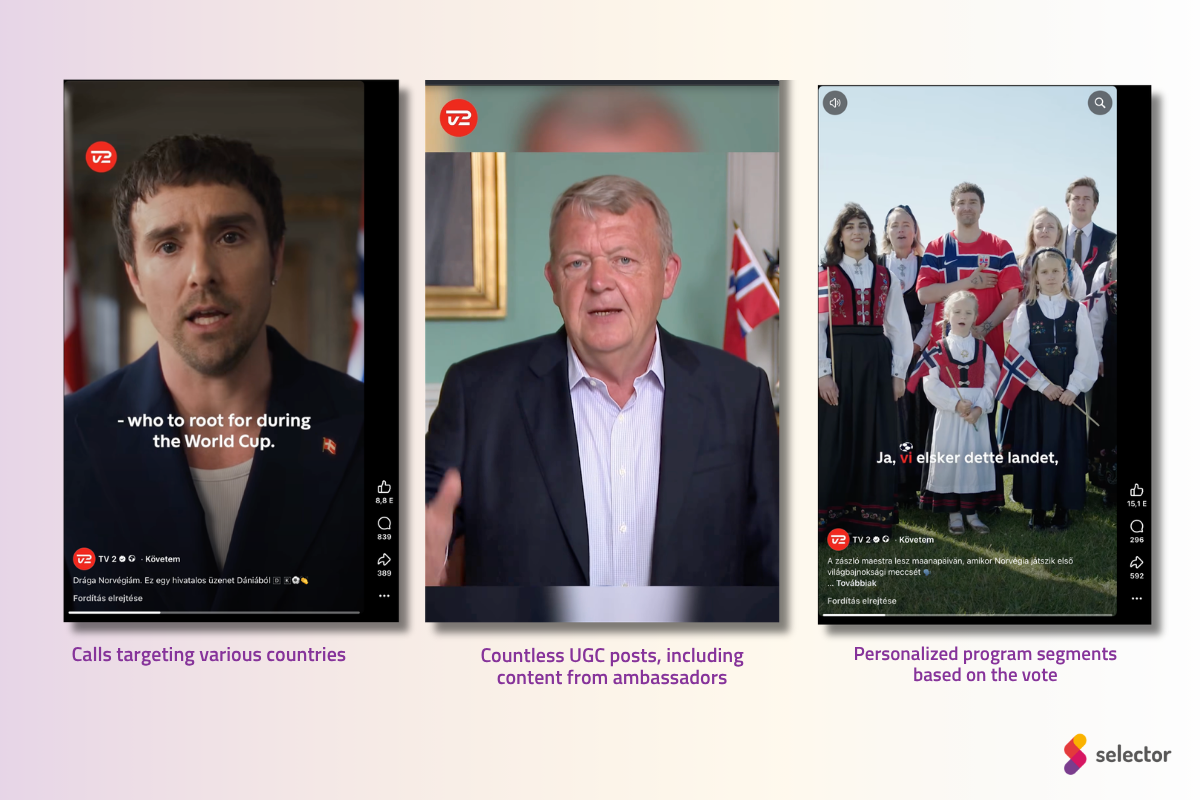
This example clearly shows that creative, well-structured social media management can liven up and add interactivity to even traditionally one-way communication like television, generating greater reach and attention for the TV channel, and even potential leads. because people had to register in order to vote.
Not bad for a country that wasn't even at the World Cup, right?
Levi’s, Heinz, Gillette – brands that weren't official sponsors, yet everyone was talking about them
The FIFA World Cup is the world's most-watched sporting event, typically drawing a global audience of over 5 billion. Brands pay significant sums for this kind of reach.
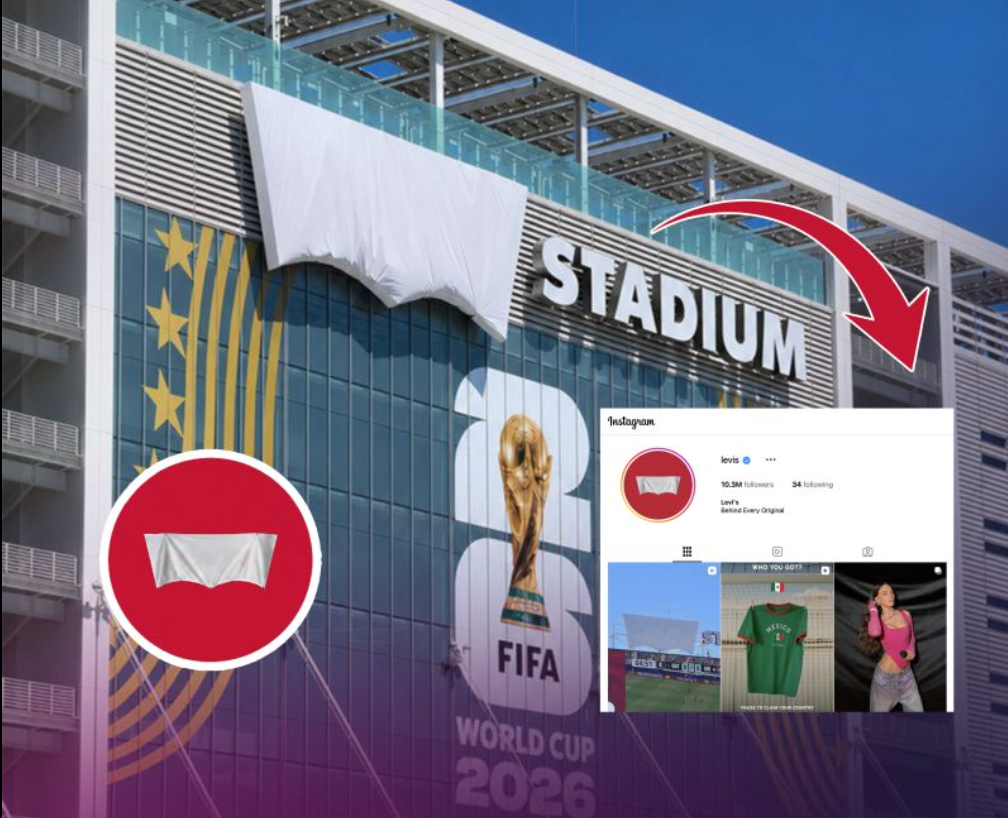
This may have been the reason why the Levi’s logo was covered up at Levi’s Stadium in San Francisco, as they were not official sponsors of the event.
However, the brand responded in the best way possible: Levi’s turned the covered-up logo into a profile picture and a global in-store activation. In London, Paris, Mexico, Brazil, and other markets, covered-up store signs appeared, and the Instagram post about the campaign generated some of the brand's strongest engagement numbers to date; in fact, other brands, such as Heinz or Gillette also jumped on the marketing bandwagon, capitalizing on the exclusion.
#m1-p#With their creative and quick reaction, Levi’s was able to generate more attention than some official sponsors who paid a fortune for their presence.##
IKEA – where the product catalog became the creative canvas
IKEA Canada’s “Assemble the World” campaign featured the flags of 18 countries participating in the World Cup, built entirely out of IKEA products. The images used towels, shelves, lamps, plush toys, and smaller home accessories to create compositions that made each nation's flag instantly recognizable.
The campaign was designed primarily for social media. Viewers were tasked with guessing which country the products represented—and in the process, they inadvertently browsed through a portion of IKEA’s product range.
The game thus functioned simultaneously as sports content and a platform for product discovery.
#m1-y#The idea later appeared in digital ads and on outdoor surfaces placed near stores.##
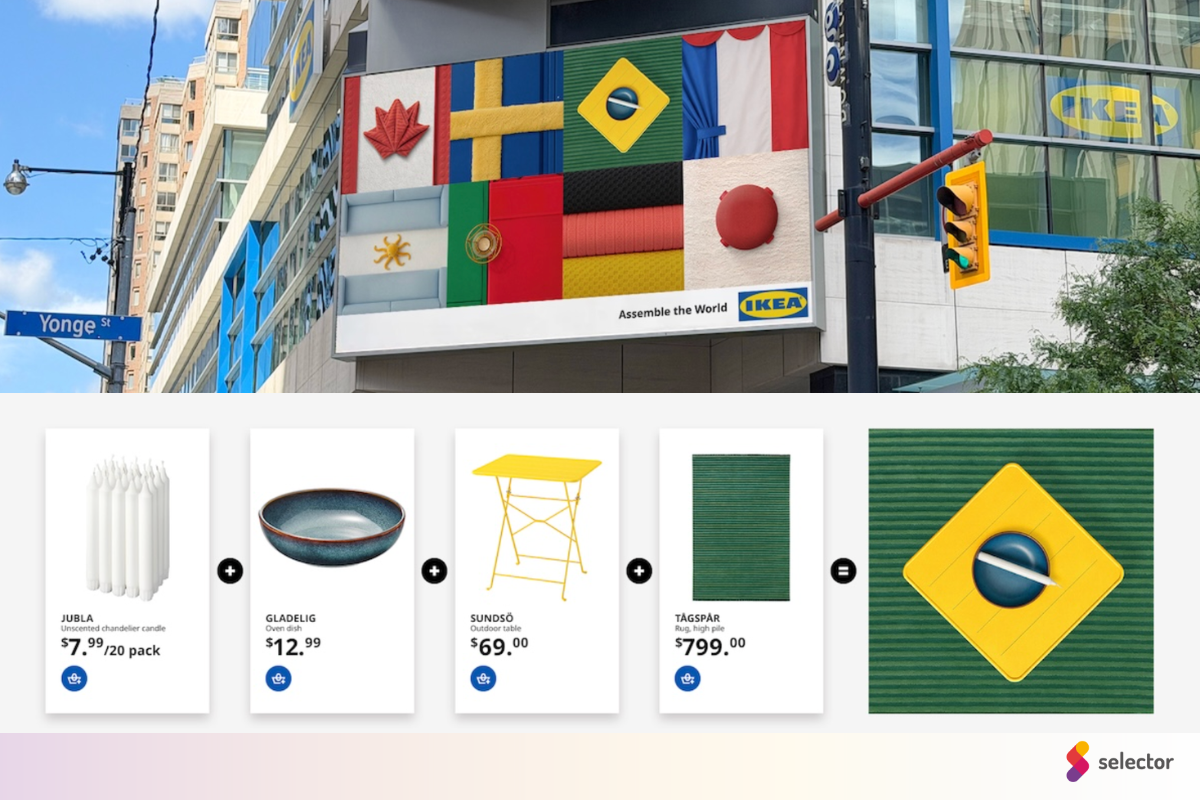
Source: IKEA Canada Instagram
IKEA did not attempt to communicate as if it were an official partner of the tournament. It did not use match footage, players, or protected visual elements of the World Cup. Instead, it translated the international atmosphere surrounding football into its own brand language: objects, colors, and playful assembly.
#m1-y#This clearly shows that a brand does not need to stay on the sidelines of a sporting event, even without sponsorship rights.##
Powerade – massive reach, but could it be an own goal?
As the official sports drink, Powerade gained visibility integrated directly into the matches.
The 208 hydration breaks across 104 matches provided a total of approximately 10.4 hours of new media space. For example, during the USA vs. Paraguay match, the four Powerade appearances generated 30 seconds of screen time, 27 million logo impressions, and, according to Zoomph’s estimates, $88,000 in media value.
The numbers are strong, but the result is not necessarily synonymous with positive sentiment—that is, the emotional perception formed by the viewers.
Many viewers perceived the introduction of hydration breaks as a negative, ad-driven change that disrupted the rhythm of the game. Although the decision was made by FIFA, Powerade was visually the closest to it, so some of the negative reactions may have "stuck" to the brand as well.
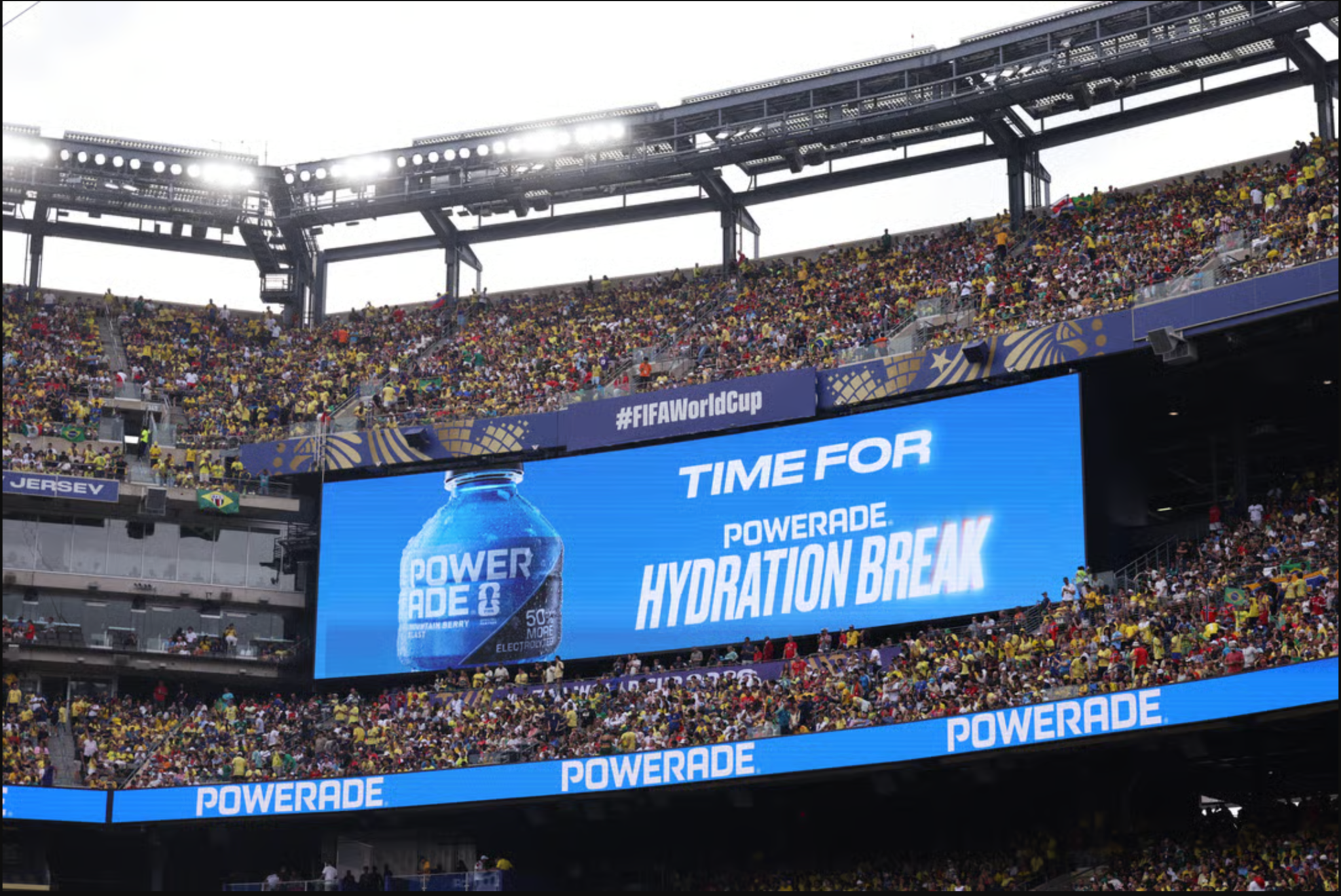
Source: Getty Images
Therefore, final evaluation will require subsequent brand awareness, preference, and sales data. At the same time, the Powerade case is a good reminder that the success of a sponsorship should not be measured solely by screen time.
#m1-p#Context determines whether the attention gained supports the brand or attaches a meaning to it that will be difficult to detach later.##
All of these factors are worth considering when developing a marketing strategy.
Rexona – Near-perfect product placement?
While Powerade was a double-edged sword, Rexona was a clear, resounding victory.
For most advertisers, the underarm area would be a highly unfavorable environment. For Rexona, however, this was exactly what gave their presence meaning.
They placed the Rexona logo on the underarm area of the fourth officials' jerseys and on the substitution boards, so the logo didn't just appear randomly on a visible surface, but in a context that immediately evoked the product's use and promise.
The digital board displayed the Rexona, Sure, or Degree brand name depending on the market, allowing them to leverage all 104 matches according to their target markets.
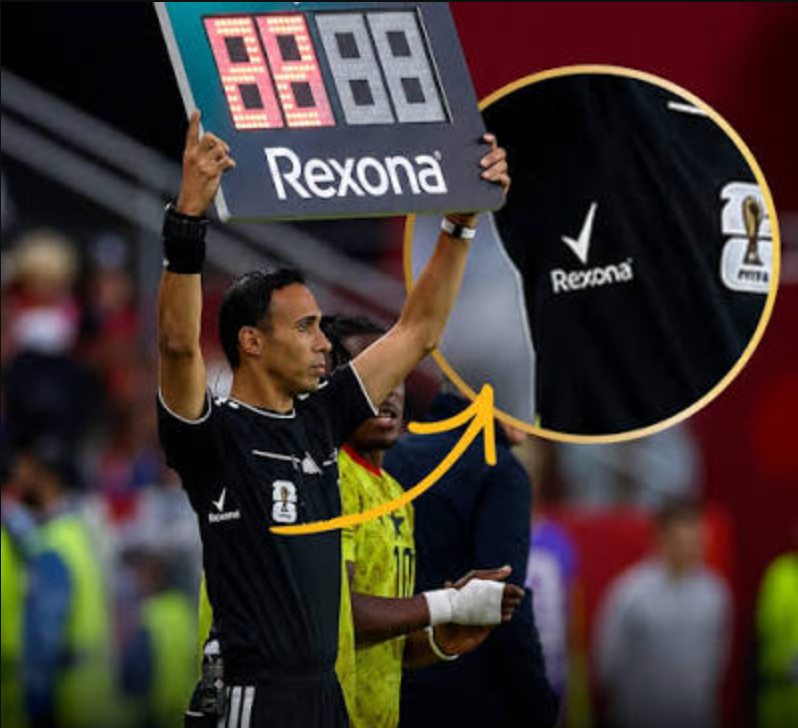
Source: soccerjerseynews
The brand turned a natural moment of the broadcast into its own message, without the need for extra explanation or a long creative backstory.
#m1-p#The power of the idea came from the fact that the media space, the product category, and the situation seen by the viewer aligned with a precision rarely experienced.##
Or, one could say that Rexona capitalized on the goal-scoring opportunity with rare precision.
Norwegian and British Airways – The competition shouldn't be limited to the football pitch
England's Jude Bellingham and Norway's Erling Haaland are among the most talked-about players in the world. Beyond their performance on the pitch, there was constant buzz around them on social media. Before the England-Norway quarter-final, the social media teams at Norwegian and British Airways cleverly tapped into this existing, growing attention with a simple but well-timed bet.
Before the Norway-England quarter-final, Norwegian publicly challenged British Airways: "The airline of the losing country must change its Instagram profile picture to the winner's brand logo for 24 hours."
The idea was simple, easy to understand, and tapped into the exact national rivalry and penchant for betting that was already fueling fan excitement before the match.
England won 2–1, and Norwegian kept its end of the bet: for one day, it made the British Airways logo its profile picture, thereby turning a defeat into a communication opportunity.
The brand didn't try to make excuses for the result; instead, it participated in the game, which made the whole story more authentic, relatable, and shareable.
Based on the numbers, the audience appreciated the gesture: British Airways' related post received over 21,000 likes, while Norwegian's received nearly 75,000. This is a particularly strong result considering that Norwegian's usual posts typically range between 400 and 1,500 likes.
So we can safely say that:
#m1-y#Although England won the bet on the pitch, both airlines scored valuable points from a communications perspective.##
What can we learn from the marketing matches of the World Cup?
The World Cup demonstrates that capturing attention alone is not enough. A brand can only profit long-term from an event of this scale if its presence feels like a natural extension of its own character, its product, and the experience the audience is having in that moment.
Levi’s used a quick reaction to turn restrictions to their advantage, IKEA translated the World Cup atmosphere into its own visual language, and Rexona found a placement where the logo itself told the product’s story. For Norwegian and British Airways, it was timing and playful brand interaction that delivered results. At the same time, the Powerade example serves as a reminder that high reach and positive brand impact do not always go hand in hand.
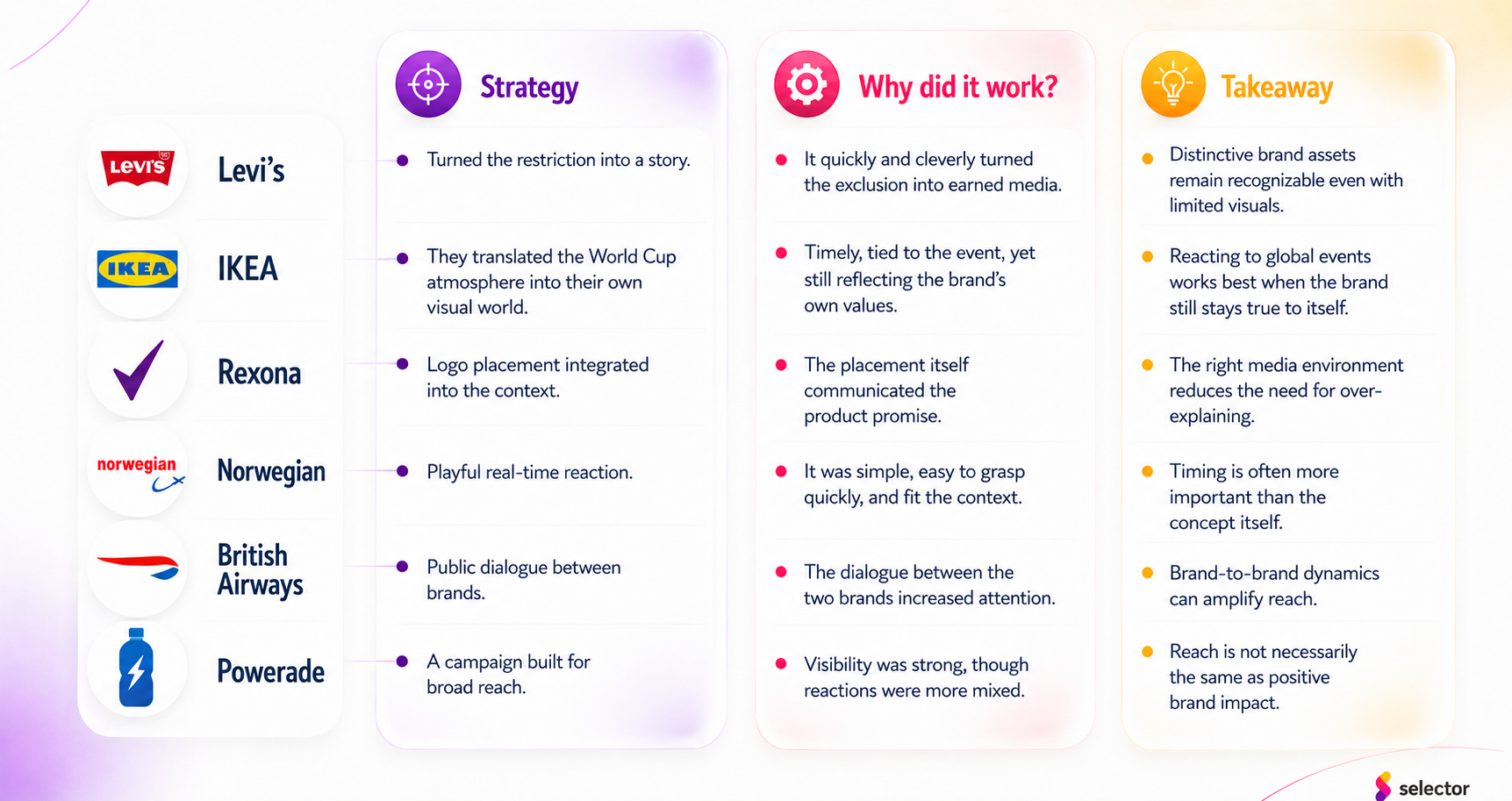
This is why, when evaluating a campaign tied to a similar event, you must look beyond impressions, likes, or estimated media value to examine the feelings and meaning associated with the brand. Reaching many people may seem like a good result, but from a business perspective, what truly matters is whether the attention gained strengthened the brand, helped with differentiation, and left a lasting impression after the event.
Summary
The marketing winners of the 2026 World Cup were not necessarily those who spent the most money or spent the most seconds on screen. The real winners were those who recognized the right situation, reacted quickly, and joined the conversation while remaining authentic to themselves throughout.
The matches on the pitch have ended, but for brands, the results only become visible later:
#m1-p#Did attention turn into memory, memory into trust, and trust into business value?##
The question is whether the audience's fleeting attention will turn into lasting attention, lasting attention into trust, and trust into business value.
Which was your favorite "marketing shot" from the World Cup?

If you're interested in exciting marketing news and roundups like this, sign up for our newsletter!


.png)

.jpg)