ChatGPT is no longer just an AI tool; it is slowly becoming a new advertising platform. As of August 24, 2026, OpenAI has launched ChatGPT Ads in 31 European markets, including Hungary, and the Ads Manager became available in Europe on September 1.
.png)
Over 1 billion weekly active users worldwide
ChatGPT is no longer just a popular AI tool: it has become a key player in search and information-gathering habits.
#m1-y#According to an August 31 announcement from OpenAI, ChatGPT now reaches more than 1 billion weekly active users worldwide.##
According to 2026 research by the Pew Research Center, 44% of U.S. adults have used ChatGPT. Among the 18–29 age group, this figure is 61%, and it is 55% among those aged 30–49.
Moreover, users are increasingly turning to AI chatbots not just for simple answers, but for searching for information, comparing options, and preparing for decisions.
#m1-p#It is therefore no surprise that OpenAI has entered the advertising market.##
Testing for ChatGPT Ads began in the United States in February 2026. By May, CPC-based ad buying and advanced measurementhad already appeared, and since then, the platform has continued to evolve toward conversion optimization, targeting, and e-commerce features .
As of August 24, ChatGPT Ads launched in 31 European markets, including Hungary, initially through the OpenAI Ads Solutions team, partner agencies, and technology partners. From September 1, the self-service Ads Manager also opened to European advertisers.
Furthermore, according to OpenAI, ChatGPT Ads reached a $1 billion annualized revenue run rate in less than 200 days, and tens of thousands of advertisers are already using the platform.
At first glance, it is easy to say that this is just another advertising platform with campaigns, targeting, clicks, and conversions.
#m1-y#However, a much larger shift is happening behind the scenes.##
In traditional Google Search, a user typically enters a search query and then navigates through results pages to find relevant information. While Google is naturally integrating more AI-based solutions into the search process, in ChatGPT, the conversational nature of the interface means that information seeking happens differently from the start: the user often defines a problem, provides context, compares options, and then asks for help in making a decision.
This is why many are viewing the arrival of ChatGPT Ads not just as another PPC channel, but as a sign that both the search and advertising markets are moving toward a new, context- and intent-based model.

Why is the launch of ChatGPT Ads such a big deal?
How does ChatGPT Ads differ from standard advertising systems?
From a technical standpoint, ChatGPT Ads may feel familiar in several ways compared to Google or Meta ads. There is targeting, bidding, conversion tracking, and campaign optimization.
The biggest difference, however, is the user environment itself: the ad can appear within a conversation where the user has already detailed what they want to achieve, what problem they want to solve, and the criteria they are using to make a decision.
For an advertiser, this provides a completely different context than a traditional search query.
What is changing in the advertising market?
The emergence of ChatGPT Ads comes at a time when search itself is undergoing a significant transformation.
Google is providing more answers directly on the search results page, and AI-based features may further reduce the need for users to click through to an external website.
#m1-y#By the first third of 2026, more than half (68%) of Google searches ended without a click.##
According to SparkToro’s analysis based on Similarweb data, this figure was 60.45% in 2024. However, the research does not prove that this change is solely due to ChatGPT: AI features, instant answers, changes to the search interface, and evolving user habits all play a role.
This is an important distinction, as it suggests that ChatGPT is not simply "stealing" traffic from Google. Rather, it indicates that the search process is becoming less and less like what we have been accustomed to over the past 15–20 years.
Users increasingly want to get answers, compare options, and make decisions without having to browse through ten different search results—and ChatGPT is built precisely for this user behavior.
#promobox-szolg-ppc-chatgpt-en#Reach your potential customers on ChatGPT, right before they make a decision!##
The user is not searching for a keyword
With traditional search engines, keywords often provide a good indication of what the user is looking for.
In ChatGPT, however, the search itself can be much more detailed: users often articulate their problem, goal, circumstances, expectations, and purchase intent in a single query.
#m1-p#For advertisers, this is significant because achieving relevance no longer requires interpreting a single keyword, but rather a complete user scenario.##
#m1-p#Search is therefore becoming less about keywords and more about context and intent.##
ChatGPT Ads is about more than just reach and clicks
One of the most interesting aspects of ChatGPT Ads' evolution is how quickly it moved from simple impression-based tests to campaign optimization that is also relevant for performance marketing.
Testing in the US began in February 2026. In May, OpenAI introduced new purchasing options and CPC-based bidding, and since then, the system has further evolved toward conversion optimization. OpenAI's European announcement in August specifically highlighted that the platform now supports conversion optimization in addition to CPM and CPC.
This represents significant progress in roughly half a year.
But what do these acronyms mean for an advertiser?
How can you measure whether it's working?
Conversion optimization can only work effectively if the system receives accurate data about what happens to the user after they click on the ad.
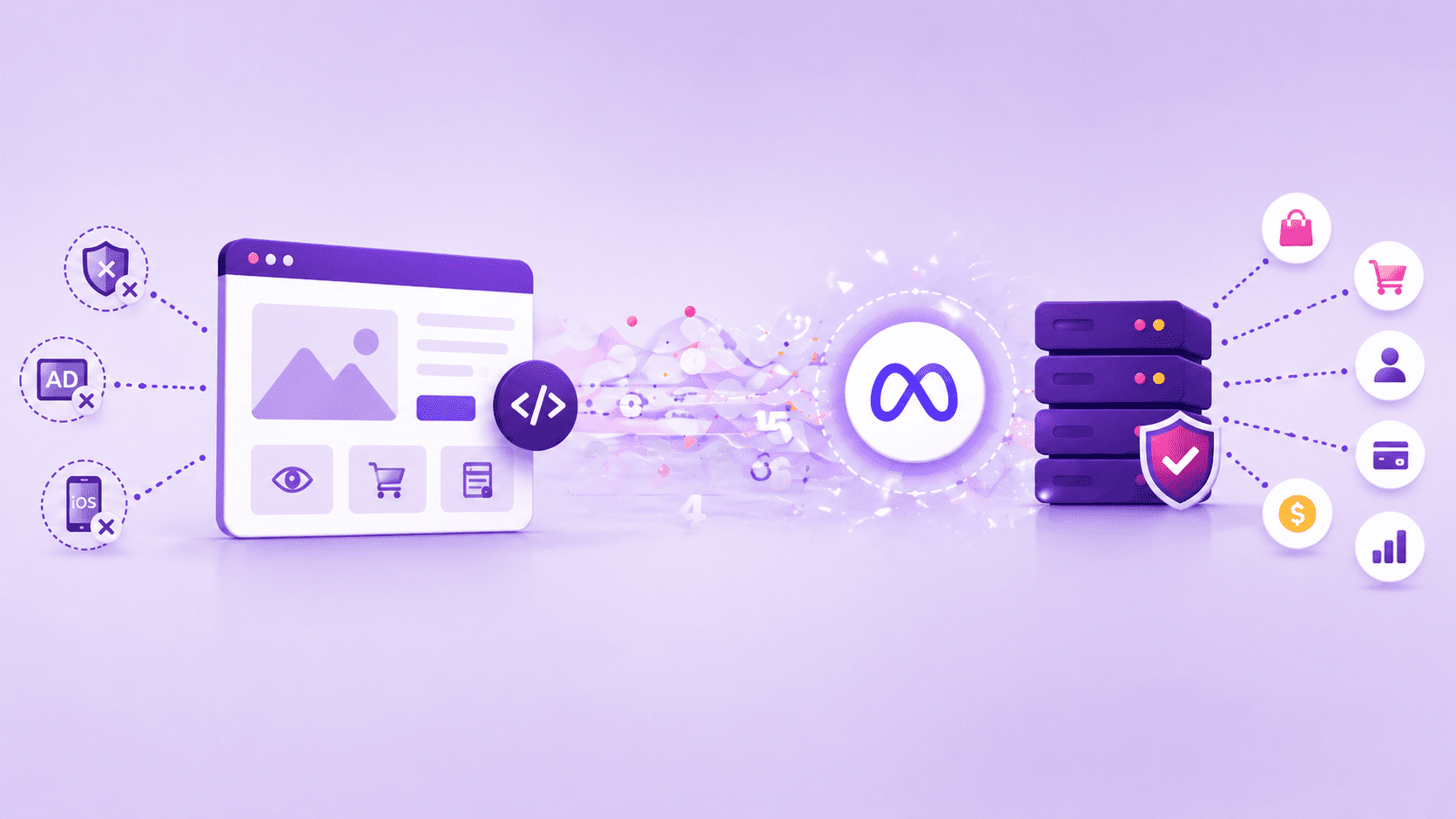
That is why OpenAI has integrated several measurement solutions into the system:
Layout: display three equal-width cards in an icon + title + short description format. Below the cards, include a full-width, highlighted text box.
What do ChatGPT ads mean for an online store?
One particularly interesting area of ChatGPT Ads' development is e-commerce.
The foundation for product ads here is also the product catalog, in other words, a properly structured product feed.
OpenAI uses its own feed structure, but it also accepts feeds created for Google Merchant Center. This can significantly simplify onboarding for webshops that already have a well-structured product database.
The feed can include, among other things (this can be in two columns to make the list shorter):
- product name,
- brand,
- price,
- availability,
- product photo,
- category,
- variations,
- size and color,
- as well as other product attributes.
This is important because, in an AI-driven shopping environment, the quality of product data can play an even greater role.
If the system knows exactly what you are selling, what features the product has, who it might be relevant to, and what problem it solves, it becomes easier to match the right product to a specific user query.
Product presentation is not necessarily limited to a single ad: the system also supports catalog-style carousel solutions.
What is currently missing
An important limitation for webshops is that while the system already supports conversion optimization, true ROAS-based optimization is not yet part of the platform.
This means that, for now, we are not yet at the same level as the mature e-commerce ecosystems of Google Ads or Meta.
Good news for online stores: you don't have to build everything from scratch
It is particularly advantageous for online stores that for ChatGPT Ads product placements, you can leverage your existing product data and feeds. If an online store already has a well-structured product feed for Google or other advertising platforms, there is no need to build an entirely new system just for ChatGPT.
While this may seem like a technical detail at first, it is actually a significant practical advantage: the same well-structured product data can be utilized across an increasing number of platforms.
Today, online stores must accurately provide the same basic information to multiple systems:
Google → Meta → marketplaces → AI-based interfaces
Product names, descriptions, prices, images, availability, categories, variants, and other attributes are no longer important just for your website. Different platforms are increasingly using this data to understand what we are selling, what features the product has, and which user needs it might address.
For online stores, this also means that high-quality, accurate, and structured product data will become an increasingly important competitive advantage in the long run – not just on a single advertising platform, but across the entire digital ecosystem.
Not quite Google Ads 2.0 yet
As exciting as the new platform is, it is important to recognize its limitations.
ChatGPT Ads is still a young and rapidly evolving system, so compared to Google Ads, there is currently less data, experience, and optimization capability available.
Conversion optimization is already possible
For product campaigns, CPC optimized for conversions is already available. This means the system doesn't just try to get as many clicks as possible, but actively seeks out users who are more likely to make a purchase.
ROAS-based optimization is still limited
ROAS shows how much revenue is generated for every dollar spent on advertising.
Example: 100,000 HUF ad spend → 500,000 HUF revenue = 5× ROAS.
Google Ads already offers the option for the system to adjust bids to a specific return on investment target. This type of fine-tuning is currently more limited with ChatGPT Ads.
Who does this pose a problem for?
This is mainly important for larger webshops, where they want to precisely control returns across many products and significant advertising budgets.
For a smaller webshop or service-based business, this may be less critical initially, especially if the primary goal is to test a new channel and gather customer data.
The current state therefore suggests that ChatGPT Ads has started moving toward performance marketing, but it is not yet at the level of Google Ads, which has been operating for years, in terms of automating and fine-tuning e-commerce campaigns.
#m1-y#This means that for now, it is better to view it as a new PPC channel whose mechanics we are just beginning to learn.##
Targeting is also becoming increasingly advanced
ChatGPT Ads doesn't stop at context.
In recent months, OpenAI has introduced several targeting options, including:
- geographic targeting,
- geographic exclusion,
- custom audiences,
- platform-based targeting.
The latter, for example, allows us to manage web, iOS, and Android environments separately. This will be very familiar to anyone who manages Google or Meta campaigns.
The main difference lies in the user context in which we encounter the person.
ChatGPT Ads vs. Google Ads
#m1-p#Therefore, it will likely be worth using the two systems alongside each other rather than as replacements for one another. ##
What should a Hungarian business do right now?
If an AI-powered system brings a potential customer to a very specific user problem, the website must also clearly communicate why they should choose this particular solution.
So, is it worth getting into ChatGPT ads now?
Following this, the text below should appear in full width as a conclusion:
ChatGPT Ads is not the next Google Ads. However, it is already clear that OpenAI is building a serious advertising infrastructure around it: alongside CPM and CPC, conversion optimization, geo-targeting, custom audiences, advanced tracking, Pixel, Conversions API, and an increasing number of automation options have emerged.
The system has evolved significantly in less than six months, and the European expansion, followed by the self-service Ads Manager launching on September 1st, marks another major step forward.
The most important change, however, is not necessarily the ad format itself, but where the ad appears.
Users no longer necessarily search for a single keyword; instead, they describe what they want to achieve, explain their problem, provide their criteria, compare options, ask questions, and then make a decision. And if we have learned anything from the history of PPC, it is that a platform capable of displaying relevant ads near the point of a purchasing decision can be extremely valuable in the long run.
With the launch of ChatGPT Ads in Hungary, this opportunity is now worth monitoring closely here at home as well.
#m1-y#It may not be the birth of a new Google, but it is certainly a new, important space where consumers and businesses can connect.##
We are also curious to see how this new advertising channel will impact online marketing, and we will be testing in practice how ChatGPT Ads performs across different campaign goals and business models.
This could be highlighted somehow, perhaps with a CTA button included:
Interested in advertising on ChatGPT? Feel free to reach out, and let’s explore together how this could be a great opportunity for your business!
#promobox#Are you ready for the era of AI-powered advertising? ChatGPT Ads is still new, but it is worth preparing your company for the age of AI-driven search now.##






.png)