The marketing engine is restarting
In many ways, September is like a second January.
Vacations are coming to an end, calendars are filling up again, decision-makers are returning, projects set aside over the summer are being dusted off, and suddenly everyone wants to "pick up where they left off."
#m1-y#As marketers, however, there is a slight problem with this mindset: we might not want to pick up exactly where we left off in June.##
Marketing didn't stop during the summer break—in fact, quite the opposite!
AI-powered search has continued to gain strength, advertising platforms are automating even more tasks, and while it’s becoming easier to create content, it’s becoming increasingly difficult to truly stand out.
Meanwhile, the most intense campaign period of the year is approaching, with autumn campaigns, Black Friday, Christmas, and the year-end business rush all piling up within a few months. It’s worth taking a look around before we shift into high gear.
What changes can we expect in the autumn of 2026? And what should you prepare for as early as September?
Here’s what you need to know.
.png)
We’re no longer just optimizing for Google search results—AI search is here to stay
A few years ago, a fundamental question for SEO strategies was where we ranked on Google. In 2026, however, the situation is much more complex.
AI-generated answers are playing an increasingly prominent role on Google’s search results pages, while many users no longer start their information gathering with a traditional search engine.
They ask ChatGPT, Gemini, or another AI assistant to compare products, search for items, choose a service provider, or simply get a quick understanding of a topic.
All of this fundamentally changes what it means to be "visible" online.
Traditional SEO is certainly not disappearing. Technical SEO, proper keyword usage, a solid website structure, and relevant content still matter.
But a new question is now added to the mix:
What do AI systems know about our brand?
It is worth checking whether an AI system can clearly answer questions such as:
- Who are we?
- What do we do?
- What are our areas of expertise?
- What services or products do we offer?
- Why should you consider us a credible source?
As a result, it becomes even more important to have clear, structured content that provides genuine answers.
Instead of an answer danced around for twenty paragraphs, a precise definition, comparison, expert explanation, research data, case study, or well-formulated FAQ is becoming increasingly valuable.
What do AEO and GEO mean?
Alongside SEO, you will therefore increasingly encounter two new acronyms:
- AEO - Answer Engine Optimization (Answer Engine Optimization): content creation aimed at ensuring search engines and AI systems can easily find and utilize your answers.
- GEO - Generative Engine Optimization (Generative Engine Optimization): a content and technical approach that can help a brand or source appear in AI-generated responses.
The point, however, is not to learn two more three-letter acronyms, but to start monitoring whether your brand appears in AI summaries.
It is also worth checking what AI says about us
Those marketing agenciesthat keep up with trends have already integrated AI audits into their processes and are examining questions such as:
Kornélia Dlehány IF YOU HAVE THE TIME, SOME CREATIVE FORMATTING COULD WORK HERE TOO, JUST LIKE IN HENI'S ARTICLES (emojis, highlights, etc.)
- If someone is looking for the best providers in our category, do we appear in the answer?
- If they ask about our product category, do they encounter our brand?
- If so, do they receive accurate information?
- Does the AI associate the same benefits and services with us that we communicate ourselves?
- Are there topics where we are experts, yet we don't appear as a relevant source?
These questions should now be just as natural in a marketing audit as it used to be to check our ranking for important Google searches.
AI is no longer a separate marketing tool - it is slowly being integrated into every platform
2023 and 2024 were largely about marketers testing what generative AI is capable of. With varying but consistently improving quality, these tools helped us:
- write a Facebook post faster,
- create images in a few moments,
- generate ten headline variations,
- or quickly summarize a document.
#m1-p#By 2026, however, AI will be less and less of a standalone tool. It will simply be built into the platforms we already use.##
The Google Ads and Meta Algorithms are making an increasing number of decisions within advertising systems. Examples include:
- automated bidding,
- targeting,
- budget allocation,
- assembling creative combinations,
- or the automatic optimization of campaigns.
#promobox-szolg-ppc-chatgpt-en#Reach your potential customers on ChatGPT, right before they make a decision!##
What does this mean for the work of marketers?
As a result, the role of the marketer is gradually transforming.
Less time needs to be spent on individual manual settings, but it becomes much more important to define the framework within which we allow the algorithm to operate.
For instance, it makes a big difference:
- What we define as a conversion.
- What data we feed back to the platform.
- Which leads are truly valuable.
- What creatives the algorithm receives.
- What business goal it is optimizing for.
Why is automation alone not enough?
AI can optimize very efficiently—but only for what we provide it.
If, for example, we treat every inquiry as a conversion of equal value, even though 70% of them will never become customers, the algorithm will learn exactly what we asked of it: to bring in more inquiries. Just not necessarily the good ones.
This is why it is becoming increasingly important to integrate marketing, sales, and data.
Instead of teaching the platform who filled out a form, we should be teaching it which leads actually turned into real business results.
AI won't replace marketers; instead, it will shift the balance of their responsibilities, placing greater importance on strategy, data quality, and continuous measurement and control.
We need more creativity—but in a flood of AI-generated content, human work will become even more valuable
By 2026, we have reached a strange paradox in marketing:
It has never been easier to create content, but it has perhaps never been harder to create content that is truly interesting.
With AI, we can generate twenty ad variations in just a few minutes. We can create images, videos, animations, product backgrounds, presentations, or entire concepts.
The catch is that everyone else has access to these same tools.
The result is an ever-growing volume of content that is technically flawless, visually polished, and grammatically correct—it just doesn't really say anything.
What kind of content easily gets lost in the AI noise?
Predictable AI phrasing. Overly sterile stock photo vibes. Airbrushed people. Meaningless LinkedIn posts. Cookie-cutter videos.
In this environment, strangely enough, things that are not artificial at all may regain their value:
- A real person speaking in a video.
- A customer sharing their actual experience.
- Showing how the product is made.
- Creating a case study with concrete numbers.
- Admitting a mistake we made—and showing how we fixed it.
- Or simply having the courage to express our own opinion on a professional issue.
So, what should you actually use AI for in content creation?
AI can help us work much faster.
#m1-p#We can use it for research, brainstorming, generating variations, and automation.##
But it’s not meant to define who we are or what we want to say for us.
The real competitive advantage won't be whether a brand can use AI (since almost everyone will be able to by the end of 2026), but whether it has the unique knowledge, experience, stories, or perspective worth amplifying with it.
Video is not a trend, it’s a fundamental format
We’ve been hearing that "video is the future" for years. Maybe it’s time to retire that phrase.
Because video is no longer the future.
#m1-p#Video is a fundamental format of modern digital communication.##
TikTok, Instagram Reels, YouTube Shorts, traditional YouTube videos, video ads, creator content, Connected TV—almost every major platform is relying more and more on video content.
#m1-y#However, this doesn't necessarily mean that every brand needs to be constantly filming new videos.##
How can you create video content more efficiently?
It’s much better to rethink how we repurpose the material we’ve already created.
For example, a well-organized shoot day can produce:
- one long-form YouTube video,
- three or four short Reels or TikToks,
- several 15-30 second ads,
- remarketing creative,
- organic social content,
- video snippet for use on a website.
The solution isn't to create something from scratch every single day, but rather to
#m1-p#repurpose the same high-quality content across different channels more intelligently.##
This will be especially critical in 2026, as the creative demands of platforms and the pressure on marketing teams continue to rise simultaneously.
Less manual targeting, more high-quality data
A PPC (pay-per-click advertising) has long been defined by one classic question: exactly who should we show our ads to.
Age, interests, keywords, remarketing lists, lookalike audiences—we used to try to assemble the ideal target audience as precisely as possible from these.
This logic is gradually shifting.
Algorithms from Google, Meta, and other advertising platforms are increasingly finding the users most likely to make a purchase, request a quote, or complete other valuable actions on their own.
What is changing in PPC targeting?
The marketer's role is becoming less about manually building the narrowest possible target audience. It is becoming far more important to provide the algorithm with high-quality data and the right feedback on who it should be looking for.
#m1-y#The more targeting decisions we hand over to the algorithm, the more critical it is that it knows exactly what we are looking for.##
What data helps advertising algorithms?
First and foremost, this requires your tracking and data integrations to be in order.
Examples include:
- GA4 (Google Analytics 4): shows how users behave on the website and what valuable events take place.
- Consent Mode: helps Google systems manage and model measurement data while respecting user consent.
- Enhanced Conversions: improves the accuracy of Google Ads conversion tracking using your own customer data.
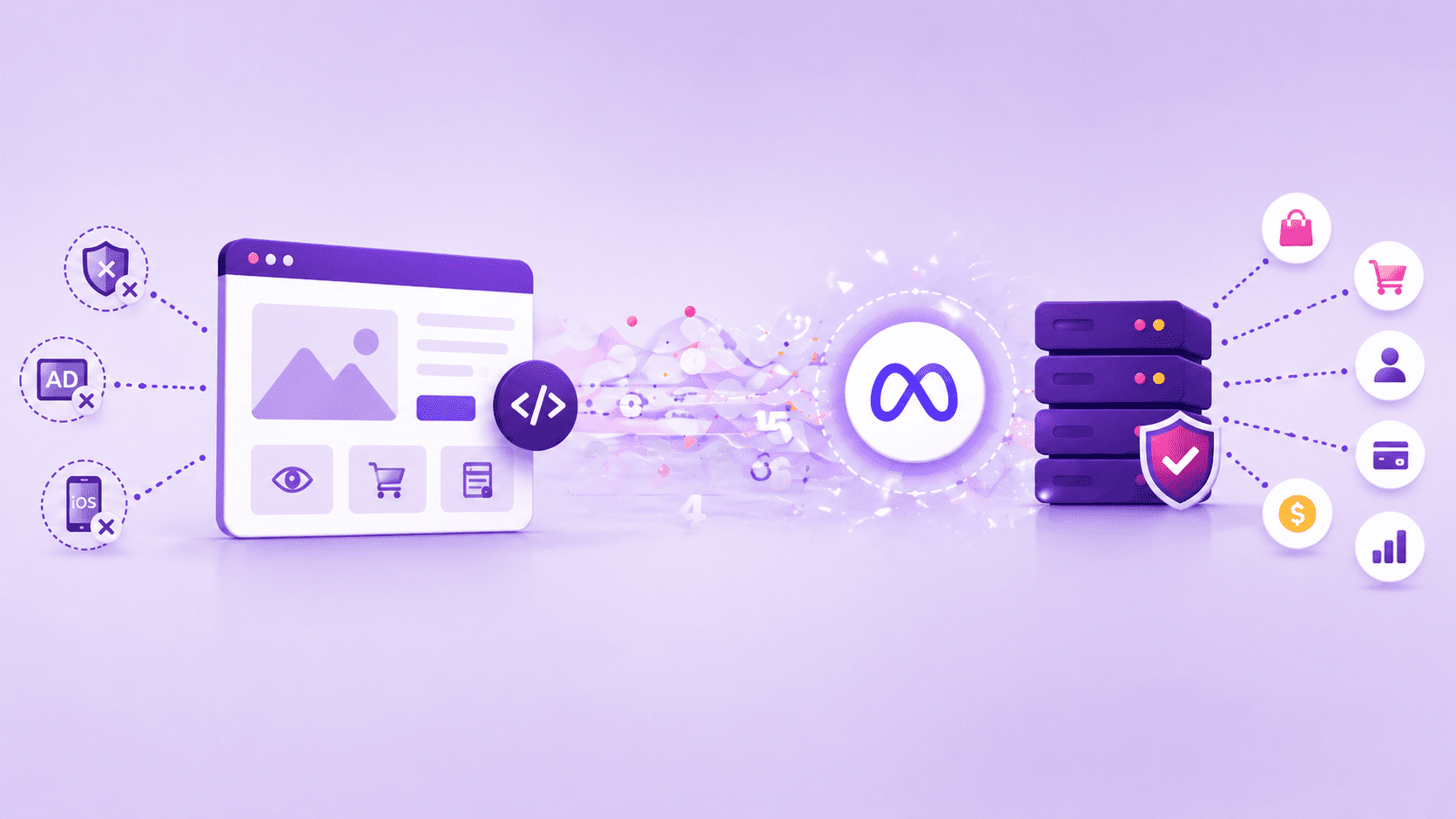
- Meta Pixel and Conversions API: allows you to send data about website events to Meta from both the browser and the server side.
- CRM integration: enables us to track not just the initial interest, but also the subsequent business outcomes.
- Offline conversions: reporting sales closed via phone, in-store, or through personal sales back into the advertising system.
- Lead statuses: information on whether a prospect has become a qualified lead, received a quote, or ultimately converted into a customer.
- First-party data: such as CRM data, purchase history, or your own subscriber lists.
These might not sound as flashy as a new AI video generator at first, yet they can have a much greater impact on what your year-end campaigns optimize for.
Why is this especially important for lead generation?
Let's say a campaign generates one hundred quote requests, which the advertising system might easily evaluate as an excellent result.
But what happens if seventy out of a hundred leads are completely irrelevant, twenty don't turn into business, and only ten are truly valuable in the end?
If the platform only sees that a form has been filled out, it learns how to find more people who will fill out that form. However, if we feed back which leads became qualified prospects or actual customers, it can optimize based on much more valuable signals.
That is why, when it comes to lead generation, it is worth asking one very simple question:
#m1-y#Does the advertising system receive information about whether a lead eventually became an actual customer?##
If not, it can easily happen that the campaign performs brilliantly in the ad manager, while management or the sales team sees a completely different picture.
What is the role of high-quality data in modern PPC?
Algorithms learn from what we measure and feed back to them, so if they receive poor or incomplete data, they are capable of optimizing for that just as effectively. One of the key lessons of 2026 is thus (somewhat paradoxically) exactly this:
#m1-y#The smarter the algorithms, the more important it is that we teach them the right things.##
The customer journey will become even more fragmented
We love to represent marketing processes as neat funnels. And for good reason: they are easy to understand, great for planning, and simply show how someone can get from the first encounter to a purchase.
How does the classic marketing funnel work?
The three best-known stages of the classic sales funnel are:
Awareness → Consideration → Conversion (e.g., purchase or request for a quote)
In other words, the customer first encounters the brand, then begins to gather information and weigh their options, and finally makes a decision.
On paper, this seems like a very orderly process.
#m1-y#However, the real customer journey rarely moves so neatly down the funnel.##
What does a real customer journey look like today?
Someone sees a product on TikTok. They search for it on Google. Two days later, they ask ChatGPT about alternatives. They watch a YouTube video, read a few Reddit comments, and then encounter a remarketing ad (an ad that targets previous visitors) on Instagram.
Then they disappear for a week, and finally, they type the website address directly into their browser and make a purchase.
Which marketing channel drove the purchase?
Technically it is quite possible that it is the last. However, the decision was likely influenced by all previous interactions.
This is why it is becoming increasingly less advisable to evaluate marketing channels solely based on last-click attribution — that is, a measurement model that attributes the conversion to the final click before the purchase.
Why can last-click measurement be misleading?
For example, if a YouTube campaign generates few direct sales, it is easy to conclude at first glance that it is not working.
But in the meantime, it is worth looking at other indicators:
- Has the number of brand searches increased?
- Has there been more direct traffic (visits arriving directly to the website)?
- Have the results of remarketing campaigns improved?
- How many of the users who purchased later had encountered the video previously?
- Did the campaign help more people recognize or search for the brand later on?
A single conversion column no longer necessarily provides a good answer to these questions.
How should the true role of marketing channels be measured?
Therefore, one of the most important questions in marketing measurement is less and less about:
"Which campaign drove the purchase?"
It’s much more about:
#m1-p#"What role did a given channel play in the final decision?"##
This requires a cross-channel perspective, better attribution thinking, and more business context.
In other words, it’s not enough to evaluate the results of Google Ads, Meta, YouTube, TikTok, or other campaigns in isolation. You also need to see how they work together throughout the entire customer journey.
The funnel remains a useful planning model. However, reality looks less and less like a straight line: the customer searches, returns, compares, switches to a new channel, disappears, and then picks up right where they left off.
#m1-y#This means we must measure not only where the purchase happened, but everything that helped lead to it.##
Competition heats up after September - you need to prepare for the Q4 ad noise
There is another very practical reason why it’s worth getting your marketing in order at the beginning of September: after that, you’ll barely have time to breathe...
Autumn campaigns, back-to-school, Black Friday, Cyber Monday, the holiday season, and year-end sales follow one another in quick succession, all while you need to start shifting focus toward year-end reviews and planning your strategy for the following year.
In just a few months, a huge number of advertisers suddenly appear on the market at once. Ad noise increases, media space can become more expensive, creative competition intensifies, and customers try to pick the one offer out of many that they will finally click on.
#m1-y#A Black Friday campaign doesn't start during Black Friday week; it starts now.##
A well-structured Q4 period often begins as early as September - and not necessarily with ads, but by answering a few fundamental questions in time:
- What will our offer be?
- How much budget can we allocate to it?
- What creatives will we need?
- Is there a suitable landing page for it?
- Is tracking working properly?
- Do we already have a sufficient remarketing audience?
- What content will we use to build interest beforehand?
- Which products or services do we really want to highlight?
If we only start looking for the answers to these in mid-November, we’re likely scrambling rather than planning.
#m1-p#September is still for planning, while November is for execution.##
That’s why it’s worth reviewing what’s working, what’s missing, and what needs fixing before the year-end campaign rush truly begins.
September marketing spring cleaning: what to check right now
After the summer holidays, it’s worth spending a few days not on launching new campaigns immediately, but on checking the state of the system upon which we intend to build our autumn and year-end campaigns.
Measurement
Let’s start with the basics: let’s see if we are actually measuring what we think we are.
- Is GA4 working properly?
- Are key events set up correctly?
- Is Consent Mode working?
- Is data arriving reliably into Meta and Google Ads systems?
- Is there an opportunity to feed back CRM data or qualified lead statuses?
#m1-y#It is very difficult to optimize well what we measure poorly.##
If our campaign data leads us astray at the foundation, the automations and decisions built upon them won't be much smarter.
AI and search visibility
After that, it’s worth taking a look at our brand from the outside as well.
Let's list the questions our target audience is actually looking for answers to, and then check:
- What does Google show for them?
- What do ChatGPT or Gemini answer?
- Does our brand appear?
- If so, does it present us accurately?
- If not, what content or expert material is missing for us to appear as a relevant source?
It is not enough for our website to simply exist technically. It also matters what search engines and AI systems understand about us from it.
PPC campaigns
Don't evaluate the first eight months of the year based solely on a ROAS column; instead, it is worth considering the following questions:
- Which campaigns delivered real business results?
- What role did each channel play in the purchasing process?
- Where did lead quality decline?
- Where are we paying for conversions that are actually of little value?
- What new automations or campaign settings have appeared on the platforms in the meantime that we should incorporate?
#m1-p#Not all conversions are equally valuable - and not every good-looking campaign is a good business move.##
Creatives
If the same three ads have been running for months, it’s probably time to tidy things up here as well.
- Do we have enough videos?
- Do we have our own photos?
- Do we have any customer stories?
- Do we have any case studies?
- Do we have any content featuring a real expert?
AI tools make it easy to quickly create new variations today, but that doesn't automatically make the creative better. You need a strong foundation first; that is what you should build further variations from.
Q4
Finally, let's take a look at our calendar.
Black Friday. Christmas. Year-end campaigns. Lead generation for early 2027.
Regarding the campaigns for the periods above, let's ask a few very simple questions:
- What campaigns should we prepare for?
- What will be our main message or offer during this period?
- When do the creatives need to be finished?
- When should we start building our audience?
- How will we measure the success of the campaigns?
The keyword for autumn is not AI, but adaptation
AI-powered search. Automated PPC. Generated creatives. Video. First-party data. Attribution.
It would be easy to pick one of these and name it the "big marketing trend" of autumn 2026, but there is one word that more accurately describes what is happening right now:
#m1-p#adaptation##
Marketers must decide ever more quickly which new technology is truly useful and which is just hype, what is worth automating, and for which tasks human judgment remains indispensable.
Because while AI can make a lot of things faster, we are still the ones who have to decide what we want to say.
The algorithm can find potential customers among a vast number of people. But it is up to us to define who we consider a good customer.
A system can generate a hundred creatives. But it is up to us to recognize which one will truly result in effective communication.
By the time everyone returned from vacation, marketing had already changed a little again, so this year, returning in September isn't just about picking up where we left off in June. It is worth taking a look around first to see what has changed on the platforms, in search, in consumer behavior, and even in our own toolkit over the past few months.





.jpg)
.png)