In recent years, TikTok has transformed from an unknown application for many into a strategically crucial marketing tool. What started as a platform for short, entertaining videos has evolved into a complex interface where content consumption, searching, inspiration, and shopping are seamlessly intertwined. It has also long outgrown the "just for young people" label: in Hungary, it currently has approximately 3.4 million active users, with an increasing proportion of users aged 25-40. Thus, TikTok is now a commercially relevant channel – not just an experimental playground.
In this article, we explore how TikTok's advertising system has transformed by 2026, what new tools have emerged, and how you should plan your campaigns on this platform today.
.png)
What kind of content do users want to consume in 2026?
One of the most significant changes that as a marketing agency we see in TikTok's evolution is that the definition of "good content" has completely transformed.
Today, it's not necessarily the most beautiful, professionally edited videos that perform best, but rather those that are authentic.
Authentic Content
In practice, this means that overly polished, ad-like videos are performing less and less effectively. Instead, content that feels natural, spontaneous, and showcases real-life situations is truly working.
#m1-p#While the platform continuously evolves technologically, users are increasingly less interested in perfect content.##
Effective ads today resemble user-generated videos much more than traditional commercials.
The Role of Storytelling
Another defining trend is the growing importance of storytelling. On TikTok, capturing attention is decided in the first few seconds, but retaining it depends on whether there's a story behind the video.
Effective ads often start with a problem, quickly pique interest, and then present a simple, understandable solution.
This doesn't require a complex concept. It's more about the viewer recognizing themselves in the given situation.
UGC - when an ad blends into its environment
Recently, more and more brands have started collaborating with content creators, and an increasing number of ads are built on what is known as user-generated content creatives that are content created by "everyday" users about the brand, making it more authentic and effective than traditional ads.
The reason for this is simple: these videos fit much better with the platform's natural flow. They don't stand out in the feed, they don't disrupt the user experience – in fact, viewers often don't even realize they've encountered an ad.
In many cases, it's precisely this content that delivers the best results.
What does this mean in practice?
If a company is considering a TikTok campaign today, it's worth rethinking the usual marketing logic a bit.
The question isn't "what kind of ad should we create," but rather:
- what content fits the platform
- how we can test quickly
- how we can stay authentic
#m1-p#TikTok is not the place where you run a perfectly polished campaign for months.##
It's much more a channel where you're constantly learning and testing.
New Tools in the Campaign Manager
In 2026, TikTok significantly stepped up its efforts to ensure advertisers don't have to jump between different tools, but can handle as much as possible within the platform.
Let's see what features you can access as an advertiser on TikTok!
Video Editor
Previously, if you wanted to produce a creative for an ad, you almost certainly used external software – CapCut, InShot, DaVinci Resolve, and the list goes on.
But today, TikTok's own Video Editor solution has developed to such an extent that in many cases, it's sufficient on its own:
#m1-y#Automatic editing, captions, stickers, music recommendations – all of these help you quickly and effectively react to a trend with your own content.##
This is especially important on a platform where the pace is fast. A trend doesn't last for weeks, but for a few days, or sometimes even just a few hours. Those who can react quickly win.
Ad Preview
This same approach is reinforced by the Ad Preview Tool . This tool allows you to see how your ad will look in users' feeds even before it launches.
It might seem like a minor detail at first, but it actually makes a significant difference:
a poor first few seconds, a slow start, or a misplaced visual element can degrade performance right from the beginning of a campaign.
With this, TikTok is essentially saying, "test in advance, don't learn on the fly."
TikTok as a Search Platform
One of TikTok's most exciting innovations is the rise of search-based ads .
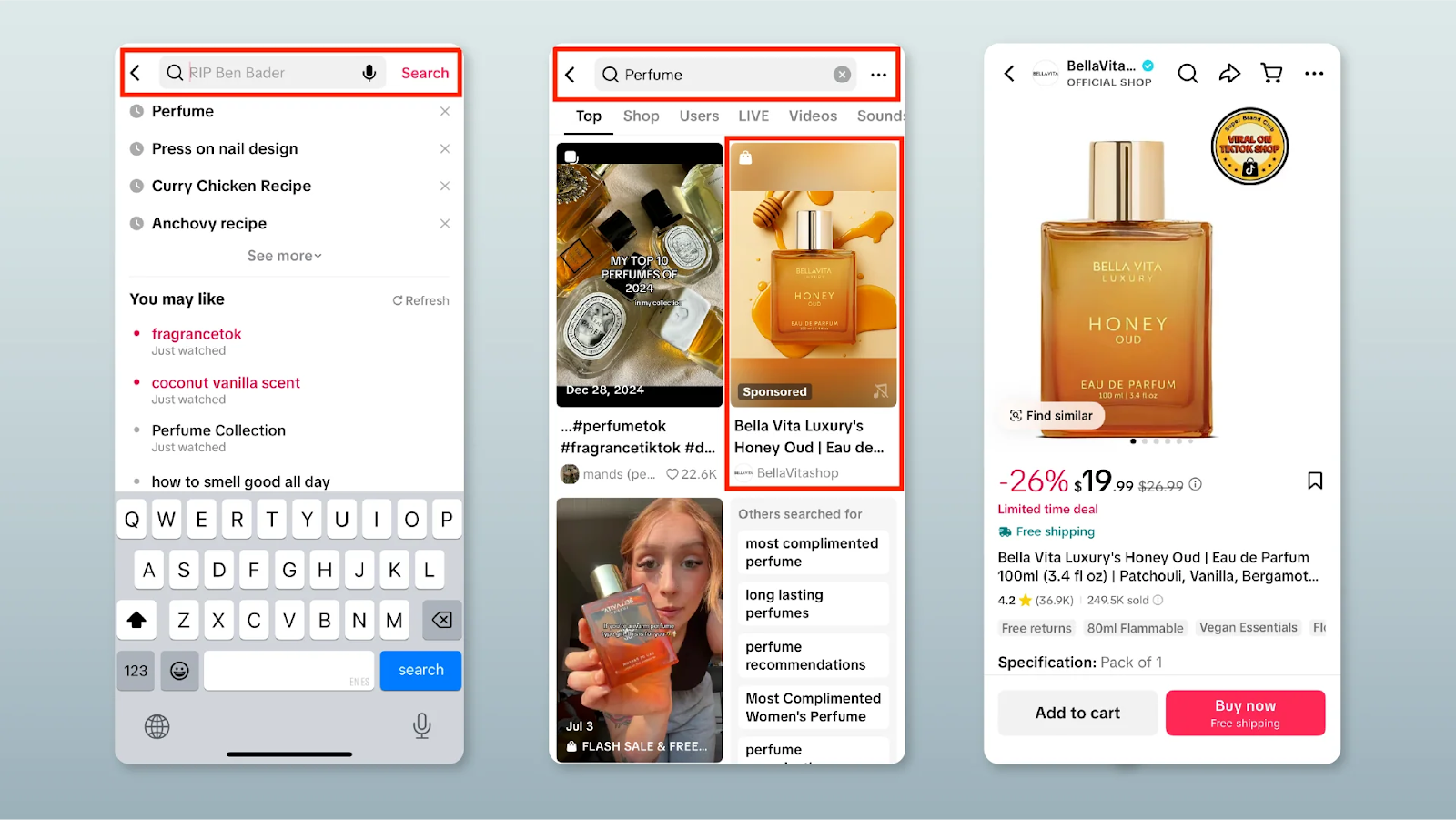
The TikTok Keyword Planner functions very similarly to Google Ads, as it's built on the same logic:
- you can find new keywords,
- see search trends,
- analyze historical data,
- and identify the most popular searches.
It's important to note that this feature is not yet available in Hungary, but it's being rolled out in more and more countries, so it's expected to appear here soon as well.
The Search Ads operation is simple: the user types in a keyword, and the ad appears on TikTok's search results page. (They work similarly to Pinterest ads as well.)
This is particularly important because approximately 35% of users already arrive on the platform with search intent. This is a completely new opportunity for advertisers, as TikTok is now not only a discovery (i.e., for exploration) channel, but also an intent-based (i.e., serving intentional search) channel.
#promobox-newsletter###
Campaign Types: Increasing Automation
TikTok's campaign structure might seem familiar at first glance if you've worked with other platforms, such as in Facebook Ads.
#m1-y#The logic here is also goal-based: you always need to decide what you want to achieve, and choose a campaign objective accordingly.##
What has significantly changed by 2026, however, is that you need to make fewer manual decisions, and the system performs more and more optimizations for you.
TikTok is clearly moving towards AI-based campaign management, where the advertiser's role is more about providing good input (creatives, message, offer), rather than micromanagement.
Let's look at how to approach campaign types in practice.
Reach Campaigns – when you want to be seen
The goal of Reach campaigns is to get your message to as many people as possible, with the widest possible coverage.
The Reach campaign type is ideal for:
- the beginning of brand building,
- launching a new product or service,
- and the top-of-funnel stage of campaigns.
Here, the goal is not immediate conversion, but rather for as many relevant users as possible to encounter your brand.
In 2026, the role of AI here is particularly strong: TikTok's system can optimize who the ad should be delivered to, even if you don't provide very narrow targeting.
This means that in many cases, you're better off with a broader target and strong creative, than with an overly narrow audience.
Consideration campaigns – when you want to generate interest
The Consideration stage is where users not only see your brand, but also in some way interact with it.
Campaign types that fall under the Consideration category include:
- Traffic (driving traffic to your website)
- Video Views (maximizing your video views)
- Community Interaction (increasing interactions with your content - likes, comments, etc.)
These are worth using, when you already have some recognition and want to further build the relationship with your audience.
#m1-y#For example, with a new service, you first gather video views, then later optimize for conversion.##
Here, AI not only optimizes reach but also identifies who is more likely to interact with your content. This is especially important on TikTok, where engagement directly influences further reach as well.
Conversion Campaigns – when business results are the goal
Conversion-optimized campaigns appear in the lower funnel of the marketing funnel:
- App Promotion (app downloads)
- Lead Generation (data collection, quote requests)
- Sales (encouraging purchases)
These work truly well when you already have sufficient data, measurement is functioning correctly, and the system has "learned" from previous campaigns.
Here, TikTok's AI can identify which users are more likely to convert, when to show them the ad, and what kind of creative performs better for them.
This also means that the role of classic fine-tuning is diminishing, and the focus is increasingly shifting towards creatives.
By 2026, TikTok's campaign management has clearly shifted towards AI. The platform is taking over more and more decisions, while the advertiser's role is strengthening in understanding how the platform works and producing content that aligns with it.
Ad Types – Which Format Should You Use When?
One of TikTok's greatest strengths is that ads do not appear as "foreign objects" on the platform, but rather integrate seamlessly into the user experience.
#m1-p#However, this also means that not every format works the same way for every goal.##
In 2026, the question is no longer "what ad should we run," but rather which format best fits the specific campaign goal and creative.
TopView – when you want to stand out from the crowd
TopView is one of the most striking formats: it's the ad that appears when a user opens the app.
This is an ideal choice for product launches or larger campaigns when quick and strong visibility is needed.
It's important to note, however, that this is a premium format, so it works best when backed by a well-thought-out campaign strategy, not just used in isolation.
Top Feed – strong, yet native presence
Top Feed ads appear at the top of the feed, but in a less direct way than TopView.
This is a good choice if visibility is important, but you don't want to be too intrusive.
In-Feed Ads – TikTok's "default" format
In-Feed ads form the backbone of TikTok campaigns. These videos appear in the feed and blend seamlessly with the content.
This is the format where AI optimization is strongest, and where creative quality truly makes a difference.
Spark Ads – when organic content drives the campaign
Spark Ads will remain one of the most important formats in 2026.
This allows you to:
- promote organic videos
- highlight creator content
- preserve original engagement (likes, comments, shares)
When should you use it?
- For UGC content
- when collaborating with influencers
- if you have a high-performing organic video
Carousel Ads – when you have multiple messages
Carousel ads allow you to display multiple images or videos within a single ad.
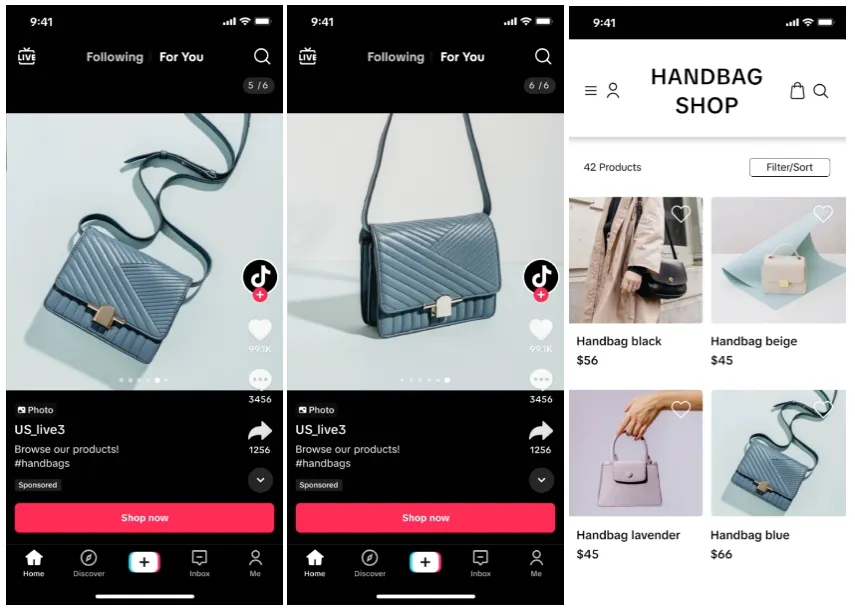
This is a slightly more classic format, but it can be particularly useful in certain cases.
When should you use it?
- if you're showcasing multiple products
- if you want to explain a process
- if storytelling works in multiple steps
At the same time, it's important: on TikTok, video always dominates, so carousels play more of a supplementary role.
Search Ads – when the user is already searching
The Search Ads is one of TikTok's newest and most exciting formats. Here, ads appear among search results, linked to specific keywords.
This can be particularly effective when the user is already actively looking for a solution.
Summary
By 2026, TikTok has clearly become one of the most dynamically developing elements of the marketing mix. The platform has simultaneously become a creative workshop, a search engine, and a sales channel.
Perhaps the most important lesson is that the key to success no longer lies in technical settings, but in how well you understand the platform's operation and how well you can adapt to it. Those who can quickly react, authentic content produce, and leverage new tools, can gain a significant competitive advantage.
#promobox-en#Do you need help managing your TikTok ads?##






.jpg)
.png)