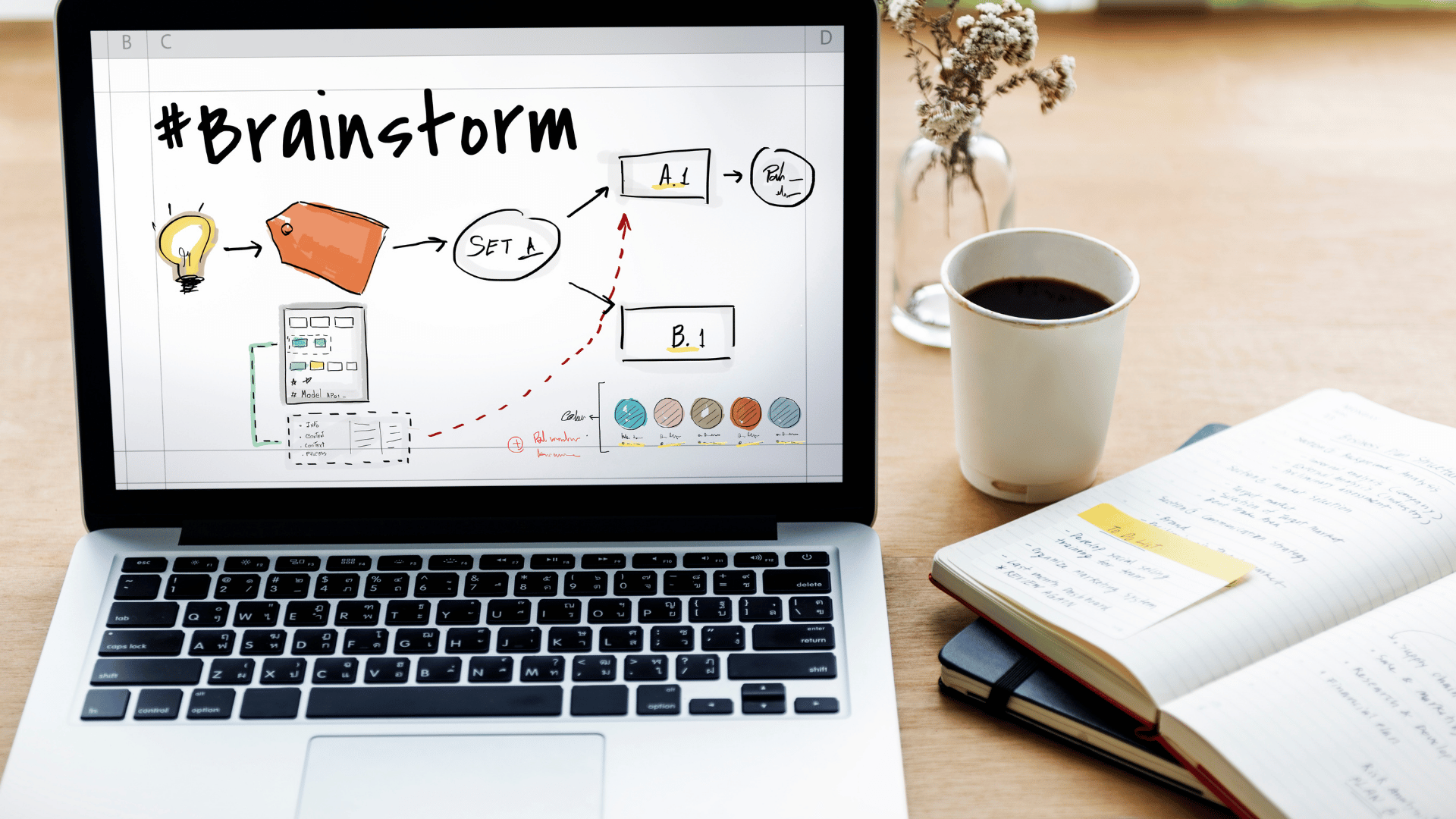
It has never been easier to get answers to our questions. For a long time, we haven't had to search through books or encyclopedias, but now we don't even need to browse online platforms and pick out possible answers. The logic of searching is transforming right before our eyes. Until now, it was enough to ensure your website ranked well in Google's search results. Today, that alone is no longer sufficient: your content must also be easily understandable for AI systems. This doesn't require new tricks, just more conscious technical and content foundations. In this article, we will go through 12 AI SEO settings that can help make your website appealing to artificial intelligence.
.png)
The same principle, multiple AI interfaces
Today, content visibility is no longer determined by a single platform. Google's AI features rely on web results, while other AI systems are increasingly using their own search, web querying, or source integration solutions. OpenAI specifically documents its bots related to search appearance and model training, while Anthropic offers separate web search and web fetch tools for accessing real-time web content. This clearly shows that "AI-friendly" operation is no longer about the logic of a single platform.
Fortunately, the basic principle is not complicated: AI systems can more easily use pages that are technically accessible, clear in content, well-structured, and authentically identifiable. No obscure tricks are needed; just ensure your website is in order from an SEO, content, and technical perspective.
Google explicitly states:
#m1-y#for AI features, the same fundamental practices that work well in search engine optimization apply as they do for Search as a whole.##
Let's review what you need to pay attention to for success!
12 AI SEO Settings that Can Make a Website Friendly Not Only to Search Engines but Also to AI
#promobox-szolg-ai-seo-en#It is time to stop missing out on AI-driven searches and answers##
1. The page must be technically accessible and indexable
This seems basic, but that's precisely why it's often overlooked.
If a search engine or an AI system relying on web sources cannot access your page, it doesn't matter how good your content is or how much effort went into the design: for the system, you practically don't exist.
Google's description states that the search process involves crawling, indexing, and serving, and specifically highlights for AI features that the page must be indexed and suitable for Google to display a snippet from it.
In practice, this means checking that important URLs respond correctly, aren't accidentally excluded from indexing, and that the search engine can actually access what you want to display.
For all this, the Google Search Consol tool.
2. Every important page should have a clear primary URL
This might seem obvious, but in many cases, it isn't.
Why is it important, then?
No one likes to put in more effort than necessary. Duplication complicates things for AI systems and search engines, making it disadvantageous.
If the same content exists on multiple URLs, with different parameters, filters, indexed versions, or weak canonicalization, the system first has to determine which is the "real" page.
Google's related documentation states that the search engine groups similar pages and selects a canonical, or representative, version – but this still creates some hassle for the search engine. The clearer you indicate the preferred solution, the easier it can treat that URL as a single source.
#m1-p#In the future, it will be even more important for systems to quickly and confidently identify a primary page.##
It's time-consuming work, yet the settings for canonicals, consistent internal linking, uniform URL usage, and a clean site structure must be maintained.
3. Have a clear sitemap and indicate updates
The sitemap is an underestimated tool in many cases.
It's not as spectacular as a new content cluster or a successful landing page – yet it's one of the simplest technical indicators of which URLs you consider important.
According to Google, the search engine constantly looks for new and recently updated pages, and the sitemap helps it discover and interpret important pages. It's particularly useful if you work with a lot of content, update regularly, or have a more complex site structure.
#m1-y#Clearly communicate to the system what is new, what is updated, and which of your pages are considered important. ##
4. Build a real, crawlable internal link network
A about internal linking is often overlooked, yet if structured well, they outline the logic of a content system. They show which page is the entry point, which provides detailed explanations, which offers related services, and which serves as a supporting case study or knowledge base.
Google specifically mentions that it's important for AI functions that content is easily discoverable through internal links.
According to the documentation on how search works, one of the main ways new URLs are discovered is still through other, already known pages linking to them.
5. Clearly structured content with headings, well-separated blocks, and quick answers
A long article alone isn't necessarily enough: the structure and segmentation of the text are also crucial.
#m1-p#It's important that the main statements are also easily findable and extractable.##
(Like here. :))
In a good, AI-friendly structure, both the user and the system quickly find the answer: first the brief explanation, then the elaboration, then the example or consequence. Such a structure also greatly improves readability. This is precisely what's good about it: you're not writing specifically for AI, but rather writing better, more "consumably" for your reader too.
Don't let the main message of the article become clear only after ten paragraphs. Don't let the entire article flow in one giant block of text. It's therefore worth structuring the text so that the essence can be quickly found under an H2 or H3 heading.

6. The main content should truly be present in the text
AI systems need content that is actually processable, readable, and accessible.
One of the biggest misconceptions regarding this is that if the user sees something in the browser, the search engine and the AI system see it the same way. This is not always the case.
Google's AI features guide specifically highlights that important content should be available in text format. And Anthropic's web search documentation states that the system accesses real-time web content and cites sources as part of the answer.
#m1-p#The practical lesson is very simple: what you want to make quotable must actually be present in the rendered, textual page content. ##
Definitions, service descriptions, prices, comparisons, author information, and key statements should not appear only as images, non-loading components, or hidden too deeply within an accordion. Don't assume the system will 'somehow read it' – make the main content visible and easily processable for AI.
7. Use structured data, but don't overthink it
There are still many misunderstandings surrounding structured data.
There is no separate AI schema, and you don't need to add as many markups as possible to your pages.
The Google's stance is clear: there is no separate AI-specific markup that is mandatory to add for AI Overviews or AI Mode. Structured data is still useful because it helps in more accurate content interpretation, but only if it truly matches the visible page content.
Simply put: an article should be an article, an organization an organization, and a product page a product page. That's it. 🙂
8. Make it clear who is behind the content
It's a well-worn cliché by now: it's not just what you say that matters, but also who says it. This was true in classic SEO, but with the advent of AI systems, it has become even more important.
#m1-y#It's harder to treat a page as a source if there's no real author behind it, no organizational background, no update logic, no contact information, and no context.##
Google's AI features guide states that the same fundamental SEO principles based on high-quality content remain valid, and the Bing AI Performance blog specifically indicates that content supported by evidence, data, and sources adds a stronger layer of trust in AI usage.
The author's name, professional bio, company page, contact information, imprint, update date, and the role of a genuine background are now gaining importance. Instead of random text, this makes the content the statement of an identifiable source.
#promobox-newsletter###
9. Visual elements should be consistent with the text
The image shouldn't just be decoration. It looks good and breaks up the text, but doesn't truly add to the understanding. If it fits, it's worth supporting important textual content with high-quality images and videos.
#m1-p#If visual elements reinforce what the text says, the entire page becomes more coherent.##
Images, diagrams, tables, and videos should support the same story as the text.
In practice, this is relatively simple to implement: if it's a product page, the image should genuinely show the product. If it's a professional article, the diagram should truly aid the message.
The AI system doesn't just see sentences; it tries to interpret the full page context.
10. The page should be fast, mobile-friendly, and easy to consume
The page speed and the page experience were long considered typical SEO topics that everyone deemed important, but few treated as a real business priority.
However, the AI era brings change in this regard too: if someone clicks through to your page from a summarized answer, a recommended source, or an AI search interface, they typically arrive with a more specific intent. Such a visitor is less tolerant of slow loading, a broken mobile view, or intrusive elements.
In the PageSpeed article we have already written about it: it's not enough to just look at the homepage's speed; important URLs must be measured. Your homepage might be fine, while your service subpages or key landing pages are slow, cumbersome, and poorly usable.
#m1-p#You can build an AI-friendly website not by generally aiming for a 'fast page,' but by specifically making your important pages faster and cleaner.##
11. Consciously decide which AI bots you grant access to
Don't worry, most websites don't need to do anything about this.
This is an advanced setting, which you generally only need to adjust if you consciously want to select which AI bots can access your site. If you don't specifically block a bot that respects robots.txt, it will by default have access to your public site.
"AI-friendly" doesn't necessarily mean unlimited access for all AI-based uses. You might want your content to appear on AI interfaces for web search, but not allow the same for training purposes. You might leave certain parts open, and others not.
Therefore, this should not be treated as a general SEO requirement, but as a technical decision that becomes important if you consciously want to regulate which systems can use your content.
12. Don't just look at traffic, but also whether you are cited
Whether we like it or not: visibility today no longer stops at clicks. For a long time, it was enough to comfortably look at how many impressions, how much traffic, and what position a page generated.
However, with AI-based results, a new question has emerged: is your content included among the sources behind the answer. In other words, from now on, it's not just worth measuring how many people reach you, but also how strong, clear, and reliable the system considers your site to be, enough to rely on it.
One important SEO lesson for the coming period could be this: you need to monitor and measure not less, but more, if you want to get a true picture of your visibility.

Frequently asked questions
What does it mean for a website to be well-optimized for AI?
It means that the website is not only easily processable for classic search engines, but also that AI-based search and answer systems easily understand its content.
The essence is not in some special trick, but in ensuring the site is technically sound, clearly structured, and that important information is presented in an easily understandable format.
Is a good Google ranking enough for a site to perform well in AI results too?
Not necessarily.
Good ranking remains important, but today it also matters how clear the content's structure is, how unambiguous the main statements are, and how usable the page is as a source.
Even a well-ranking page isn't guaranteed to perform well in AI-based results if its content is difficult to interpret or technically disorganized.
Is separate development needed to make a website easily understandable by AI systems?
Not always.
In most cases, it's not about separate development, but rather tidying up existing SEO and technical foundations.
This includes, for example, indexability, a clear page structure, well-thought-out internal linking, appropriate canonical settings, the structured data and fast, mobile-friendly operation.
What's the first thing you should check?
Based on the answer above, it's worth checking first if your most important pages are truly accessible, indexable and well structured.
If search engines can't clearly process your content, subsequent fine-tuning will be far less effective. That's why it's always best to start with the fundamentals:
- technical accessibility,
- a clean URL structure,
- appropriate headings
- and easily readable content.
How can you tell if a website performs well in an AI-based search environment?
Currently, there isn't a single universal metric, so it's best to consider multiple factors together.
Classic SEO performance is important, but it's also increasingly crucial how clear, consistent, and suitable your content is for a system to rely on as a source.
In other words, don't just look at how many clicks the page generates, but also how robust, reliable, and easily interpretable it is as a source.
Should I optimize my site more for Google AI or ChatGPT?
The foundation still relies on Google:
Google AI Overviews relies on the same search infrastructure and fundamental SEO principles as classic Google Search.
You can achieve better visibility in ChatGPT if OpenAI's search bot can access your site's content, and if that content is clear, well-structured, and easily quotable.
How do Google AI and ChatGPT's algorithms differ, and how differently do I need to optimize?
The exact algorithm is not public for either, but there are some differences in their operational logic:
- Google AI Overviews is part of Google Search and is built upon the same technical and quality requirements.
- In contrast, ChatGPT is a conversational response engine that uses its own search capabilities to find web sources and links to them.
Because of this, optimization doesn't need to be entirely different; it's more about shifting the focus.
The for Google, classic SEO and indexability are fundamental, while for ChatGPT, it's an added advantage if you have structured data,if the text is clearly worded,and if the page clearly indicates what company, brand, product, or topic it's about.
How can I track and measure the results of AI SEO optimization?
From Google's perspective, the most important measurement tool remains Search Console.
Impressions and clicks from AI Overviews and AI Mode appear in the standard "Web" Performance report, not as a separate channel. It's advisable to connect this with GA4 to see not just clicks, but also sessions, engagement, and conversions.
From ChatGPT, referral links automatically include the utm_source=chatgpt.com parameter, so you can filter this traffic separately in GA4 and measure whether it genuinely brings business results.
Our web analytics team wrote more about this here: Filtering AI Traffic in Analytics: Key to Better Decisions
How do I decide which prompt responses to monitor?
Defining the right prompts requires careful consideration, because the questions that first come to mind may not be the right ones. We need to find questions that are business-critical and cover genuine search intent.
Search Console can be a good starting point, as it shows problem-solving, comparative, and decision-making queries.
You can also use prompt research tools that show what questions your target audience asks AI systems.
What tools should be used to examine the changes?
Search Console is the basic tool, but if you specifically want to measure AI visibility, there are already separate paid tools for this:
- the Semrush AI Visibility Toolkit shows AI mentions, prompts, and competitor differences,
- and the Ahrefs Brand Radar monitors brand mentions in AI searches, on Reddit, and on YouTube.
How long does it take for AI SEO optimization to yield results?
This can vary by topic.
Both mapping and reprocessing can take from a few days to a few weeks., and the ranking effect is visible within days in some cases, while other times it takes weeks or even months.
Therefore, as a general practice, it's advisable to evaluate the results not daily, but within a window of at least a few weeks.
Should a separate FAQ section be created for every page and blog post?
No, not every page needs a separate FAQ section.
It's advisable if there are truly recurring, decision-influencing questions, which the main text does not answer clearly enough.
It's also worth knowing that Google nowadays typically displays FAQ rich results only for well-known, reliable health and government websites. Therefore, for most other websites, the FAQ section primarily helps inform users rather than generating a separate Google appearance.
So, don't use it as a mandatory template element, but rather as a concise answer block addressing real user questions.

Being present is no longer enough
The search results list alone no longer tells the whole story. Your website must not only be rankable but also understandable. It must not only be able to get clicks but also stand its ground as a resource.
The essence of AI-friendly operation is truly this: to build the site in such a way that it's not just present on the web, but truly becomes a usable knowledge source for systems that interpret the web as well.
Sources:
https://developers.openai.com/api/docs/bots/
https://platform.claude.com/docs/en/agents-and-tools/tool-use/web-search-tool
https://developers.google.com/search/docs/appearance/ai-features
https://developers.google.com/search/docs/crawling-indexing/consolidate-duplicate-urls
https://developers.google.com/search/docs/crawling-indexing/links-crawlable
https://developers.google.com/search/docs/appearance/structured-data/sd-policies
#promobox-en#Could your website use some fine-tuning? We'll help you get the technical and content foundations in order, so your website doesn't just appear in search results, but also becomes a well-understood and usable resource for AI systems.##
-min.png)




.jpg)
.png)