
As the flow of information accelerates, it is becoming difficult to keep up with the ways we search. Take voice search, for example, which has now become a fundamental feature of search engines and is increasingly used in our daily lives. In this article, we explore the world of voice search, how to use it, and its impact on search engine optimization.
.png)
The era of voice commands
In 1980s sci-fi movies, we often saw scenes where the hero—amidst sets that make us smile today—would ask questions and give instructions to a computer. As if it were the most natural thing in the world, they would simply talk to someone or something that would execute their commands precisely. Talking to a machine? Or, essentially, an artificial being? At the time, it all seemed quite futuristic and fit for the big screen, but today, it is our reality.
And how was it in our own lives? Once upon a time, if we wanted to find information, like a phone number, we would pull out our tattered, bulky phone book—a mandatory household accessory—and spend time flipping through hundreds of thousands of lines until we found the number we needed. Then came digitalization. If we want to find information now, we use a computer and the internet. True, we still have to use our fingers to type because we provide the request in written form, but this method is much faster and easier than flipping through a phone book. Isn't it much more convenient to simply speak, use voice search, and instruct the machine rather than laboriously typing out the question? So, what does this search method offer us?
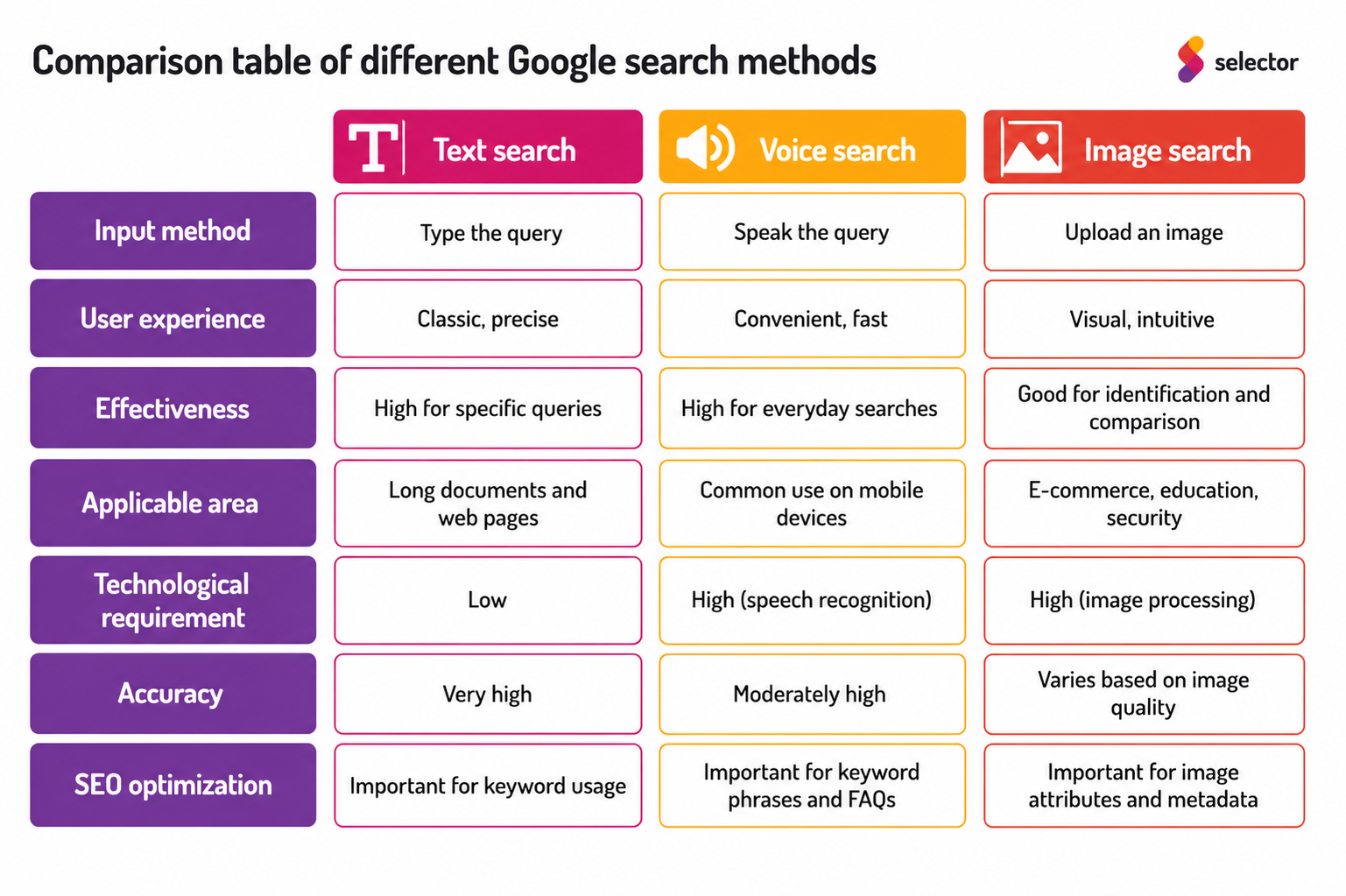
The essence of voice search is that it allows us to search for information on the internet using voice commands, without having to type in search terms.
In our fast-paced world, who doesn't do at least three things at once? This is why voice interaction is particularly useful in situations where our hands are busy with other activities, such as driving or cooking. It is no coincidence that Google's voice search is one of the most popular services of its kind, using artificial intelligence to process user requests.
The technology: from words to text
Using it is simple. The easiest way to activate it is by clicking the microphone icon in the search engine to start the search. With Google Voice Search technology, the words spoken by the user are converted into text, just as if we had typed them into the Google search bar.

How can I use voice search?
Voice search is available in search engines on desktop computers, tablets, and other mobile devices alike.
There are many situations where our hands are occupied with a task while we are looking for information. Because of its easy and spontaneous nature, it is not surprising that the voice search feature is most frequently used on phones.
Just as we are generally more spontaneous and natural when speaking, this type of search is also more natural, which often leads to more accurate and relevant results.
It provides the same search results
Although search terms and phrases may vary depending on whether we search in writing or by voice (e.g., I might type "hotels in 13th district," but I say "find me a hotel in the 13th district"), we still get the same search results whether we initiated the search from a desktop or a smartphone.

How does voice search affect SEO?
Since voice search is simply another way of entering search terms, it does not directly affect SEO, yet it must be taken into account when developing your future SEO strategy.
It is easy to see why.
#m1-p#When searching for the same thing, we type different search terms into the search box than we say out loud, which is why voice search brings new, previously underutilized search terms to the forefront.##
Since these searches are often longer and sound more natural than typed search queries, it is worth optimizing websites for voice search habits from now on. In effect, our range of keywords expands because longer search phrases also play an important role.
Optimizing websites for voice search
Voice search significantly influences search habits, which has a major impact on keywords, so it is worth re-optimizing our content for these new search terms. Naturally, mobile-friendly, fast-loading pages, as well as well-structured content written in natural language that provides specific answers to questions, will take center stage.
What should you focus on?
In terms of SEO, voice search fundamentally reshapes how websites need to communicate with users.
Keywords targeting natural language usage
Voice searches are conducted in everyday spoken language, as users talk to their devices as if they were speaking to a person. This means that question words (e.g., where, what kind of, how much, etc.), conversational keywords (e.g., how to, show me, find, etc.), and long-tail keywords are becoming increasingly important. It is worth conducting specific research into how users phrase and combine keywords related to our business or services, and creating content accordingly.
Quick answers
Users almost always want specific answers, not a vague descriptive section or a list of websites. This increases the importance of so-called featured snippets and other quick, specific answer formats.
Local searches
These often target local information, such as "where is a hotel nearby?" Therefore, the role of location-based results is also becoming more valuable.
#promobox-newsletter###
What elements should you include on your website?
Frequently Asked Questions (FAQ) pages
Q&A-style content is an excellent way to provide quick, comprehensive answers to the questions your audience asks in everyday language.
Using Schema markup
Structured data, such as Schema markup, helps search engines better understand your website's content and improves your chances of appearing in featured snippets. These highlighted boxes are taking up more and more space at the top of search results, making them a fantastic opportunity to get your website noticed.
Mobile-friendly website and fast loading speeds
We’ve heard it many times before: having a mobile-friendly website is crucial. As mobile devices become even more integrated into our daily lives, this importance only continues to grow. Since the majority of voice searches are performed on mobile devices, it is vital that your site loads quickly and is easy to navigate on mobile.
The technology of the future
Smart homes
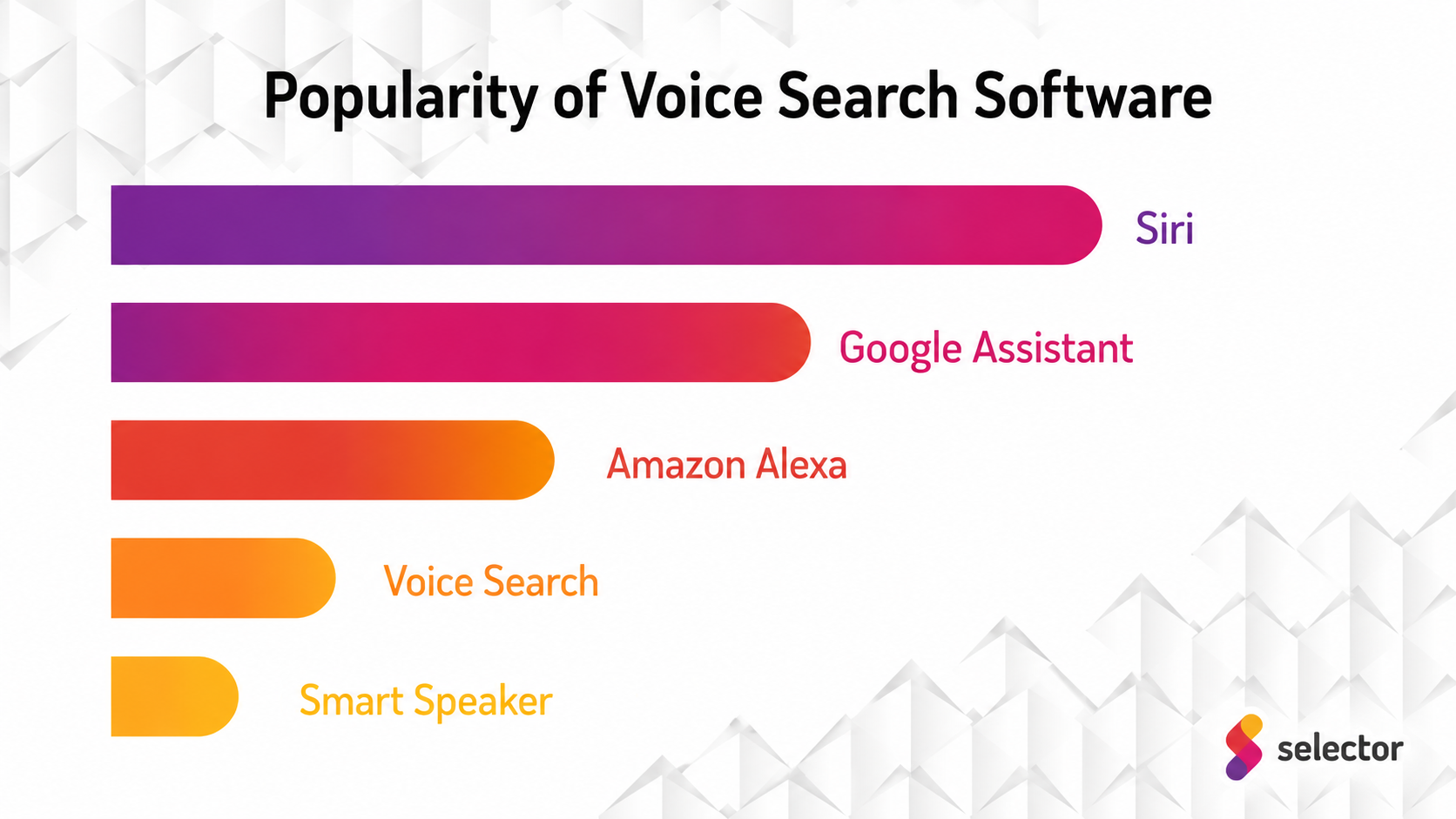
Voice technologies like Google Assistant, Amazon Alexa, and Apple Siri are already playing a central role in the rise of smart homes. With their help, you can simply say the word to lower your blinds, turn on specific lights, and much more. As this technology rapidly evolves, more and more devices and applications are becoming voice-controllable, further increasing the convenience of our daily lives.
#m1-y#The day is not far off when our lives will truly feature the kind of voice control we’ve only ever seen on the big screen.##
Technology that can create equal opportunities
We are not all the same. Voice technology opens new doors to online content for those who struggle with reading, writing, or typing. Through voice search, the vast wealth of information available on the internet becomes easily accessible to them as well.
#promobox-en#Need expert advice on optimizing your website for search engines?##
-min.png)





.jpg)
.png)