Native advertising represents one of the most exciting, yet for many, little-known, avenues in online marketing. If you've only considered PPC campaigns until now and native formats haven't crossed your mind, it might be worth rethinking your strategy. These ads aren't intrusive, yet they naturally guide users towards your brand – with content, value, and trust.
.png)
What is native advertising, and why is it effective?
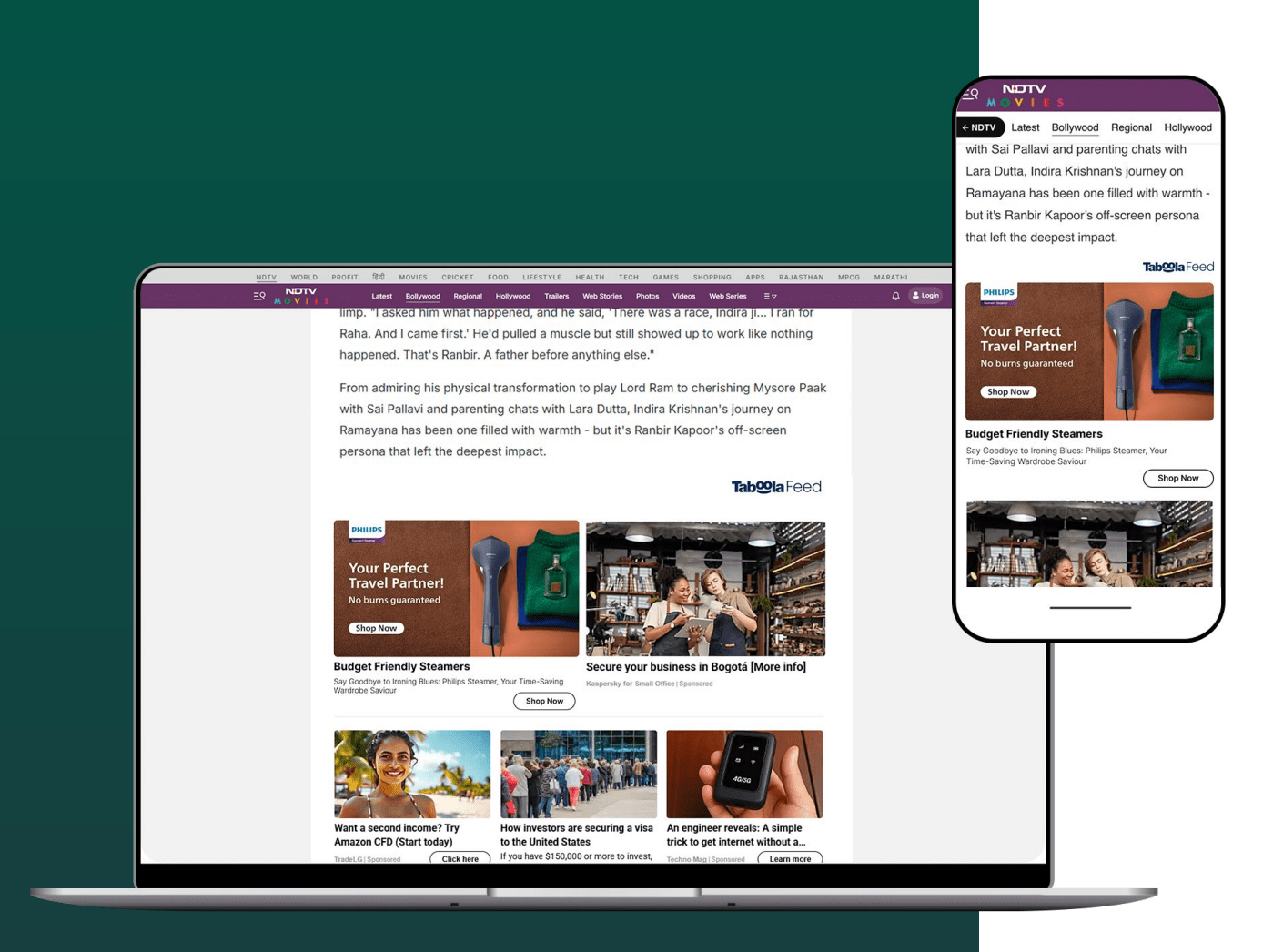
Native advertising is paid content that integrates into the user experience by matching its form, style, and layout to its environment. It doesn't stand out, flash, or intrude; instead, it blends seamlessly into the platform as if it were part of the editorial content.
However, there are cases where individual platforms deviate slightly from this. Teads, for example, during the Danone product launch campaign , specifically displayed native banners in a way that made them stand out from their surroundings:
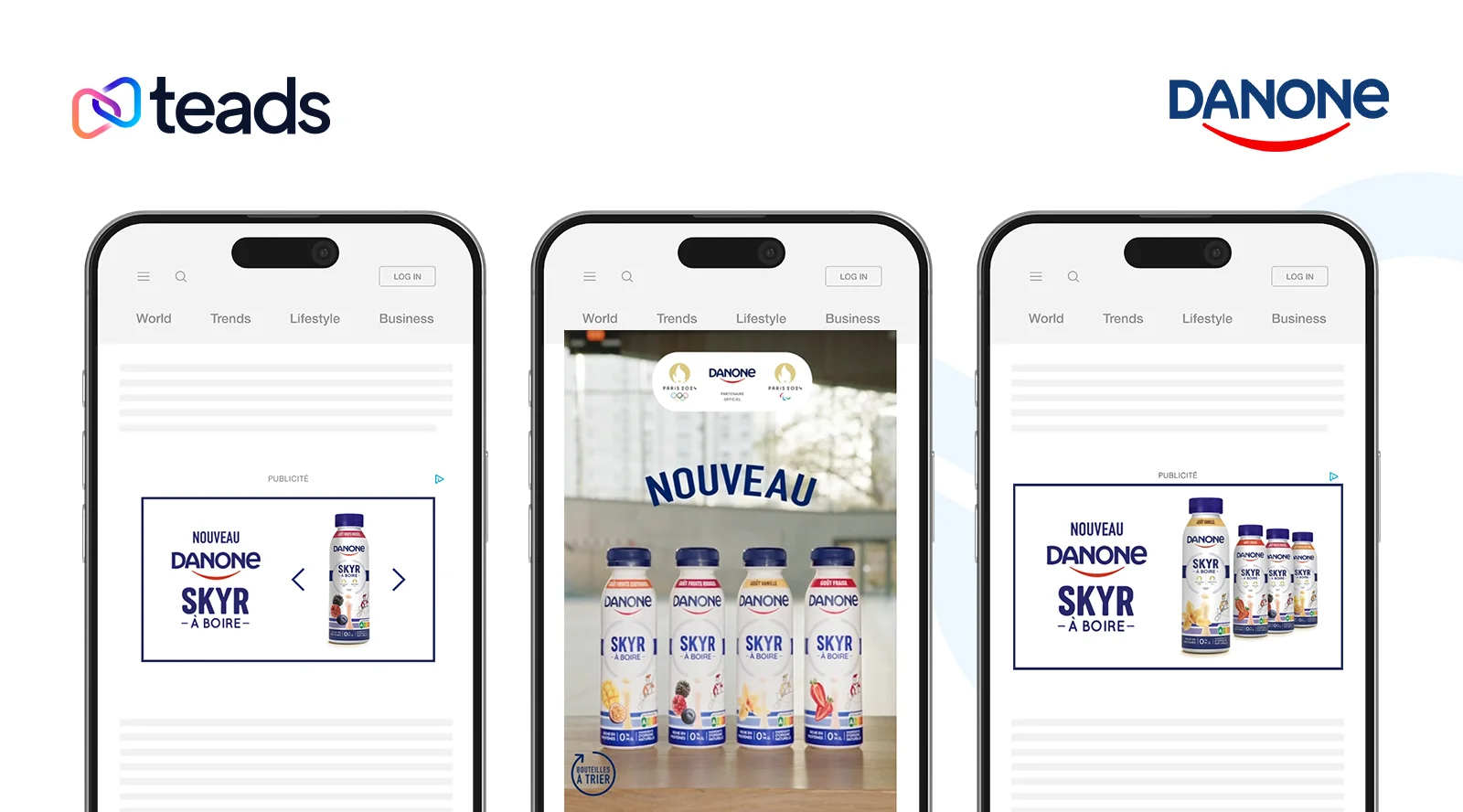
Source: Teads
It's important to emphasize that this is not camouflage, nor is the goal to deceive website visitors. Ethically and legally, native ads must still be clearly marked as "Sponsored," "Partner Content," or "Advertisement." This promotes transparency and user trust.
A less intrusive, less ad-like experience
In the online space, users encounter countless ads daily, whether banners, pop-ups, or videos. Over time, users develop what is known as banner blindness phenomenon. In such cases, they subconsciously no longer register ads whose format is too familiar or too overtly promotional. This means that even if they see them, they don't react to them.
In contrast, native ads:
- do not interrupt the user's browsing experience as abruptly,
- organically blend into the content environment,
- thus increasing the likelihood that users will pay attention to them instead of automatically navigating away.
Higher engagement, better CTR
Statistics also confirm that native ads can deliver better performance in certain metrics than traditional display (banner) ads.
Examples:
- The Publift data shows that the average CTR for native ads is ~0.20%, while for classic banner formats it is ~0.05%.
- According to Taboola's statistics, the native format can achieve 8 times or even more higher CTR than the display format.
- According to ZipDo's report: "The average click-through rate (CTR) for native ads is 0.30%, which is higher than the 0.09% for display ads." - demonstrating that there can be a significant difference between the two formats.
#m1-p#What does this mean in practice? If you target the same audience, and one campaign runs in display format while the other runs in native format, then theoretically, the native ad can expect more clicks and more interactions, provided that the creative and content are high-quality, relevant, and fit the platform.##
Better Brand Recall, Longer Interaction
Native ads not only generate more clicks but also ensure that users stay longer and engage more deeply with the content. This means the user doesn't just click, but reads and views it, thus having a greater chance of building brand recall and strengthening brand loyalty.
Specific data:
- According to IAB Europe's research, a native campaign can achieve better results in terms of quality visits (e.g., staying on the page for at least 60 seconds) compared to classic display ads.
- A joint case study by Kantar and Taboolain which native ads increased brand favorability by 15%, brand awareness by 10%, and strengthened message association by 87% - meaning users didn't "just see" the ad, but also remembered the brand and the message afterwards.
- Furthermore, because native content doesn't interrupt the user experience, users connect more easily, increasing the chance they will return later, for example, as a remarketing audience.
This is especially important when the goal is brand building, increasing awareness, shaping opinions, or storytelling, rather than an immediate "buy now" campaign.
Who is it recommended for?
If we examine the situations where it's worth considering native advertising, the following points support it:
- If your campaign goals are: increasing brand awareness, education, reaching new audiences.
- Sectors or topics where reading/attention/engagement is more important than a quick click.
However - and this is also very important - the native format is not always ideal:
- If your goal is immediate conversion, whether it's a quick purchase or a promotional communication ("Buy now - 50% off").
- If your landing page isn't prepared for content context, meaning the landing page doesn't deliver the value promised in the ad, then the native format can backfire.
- If the creative quality is poor (bad image, overly generic title, doesn't fit the environment), then native advertising won't work wonders either, as its benefits can only be leveraged if the execution is appropriate.
What to pay attention to when launching a native campaign
We also observe with our clients that despite great banners and impressive numbers, it's worth closely monitoring the performance of each campaign, because no matter how good the settings and the product itself are, native advertising doesn't work for every company. If increasing brand awareness is the goal, it's definitely an effective tool and worth deploying, but you should expect the following:
- primarily, the CTR will not be high
- conversion is typically indirect
- it requires strong and relevant content behind it
So, these are still worth considering. As a marketing agency we also make sure we're not operating blindly. For these reasons, we only proceed if the client is fully aware of these factors, and we closely monitor campaign performance week by week.
How does it work?
Today, native advertising is no longer about manually organized, simple banner campaigns. Instead, it's powered by a much more sophisticated, technology-driven system that automates ad buying, placement, optimization, and measurement. This approach is often referred to as programmatic native advertising, meaning ads that run through automated platforms but seamlessly integrate into the content environment.
The detailed steps below illustrate how a native campaign is built step-by-step and highlight the key points to consider.
Implementation Steps
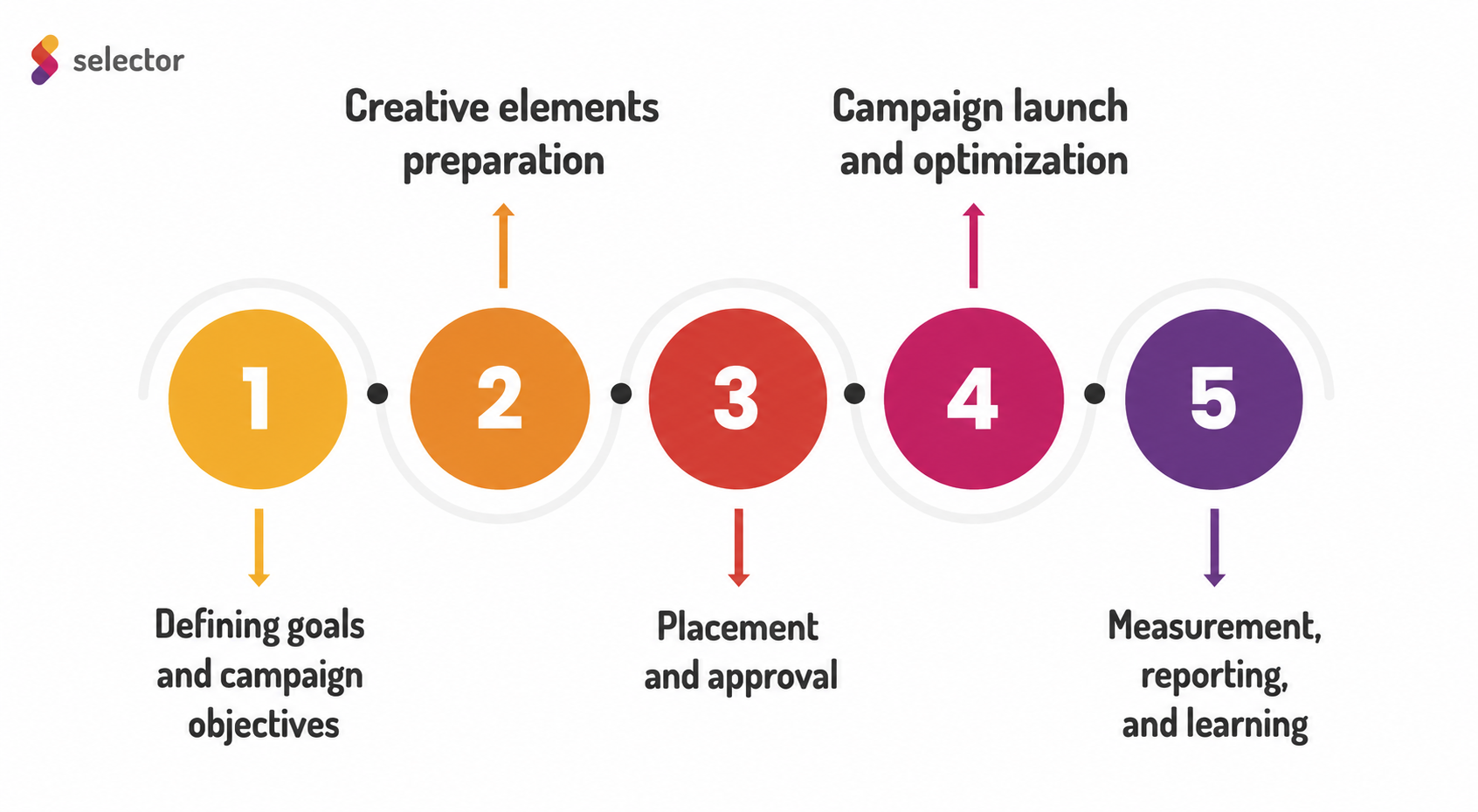
#m1-p#Here's a summary diagram of the process – let's look below, step by step, at what to pay attention to in each phase.##
1. Define Target Audience and Campaign Goal, Select Platform
The first and most crucial step is to clarify the following: Who do you want to reach, and what do you aim to achieve with them? This is vital for native campaigns because the combination of text and images, the content environment, and placement will only be truly effective if your targeting is precise from the outset.
- Demographic data: age, gender, geographical location, for example, "around Budapest, 25-45 years old."
- Interest and behavioral targeting: e.g., those who have already visited your site, read similar content, or are part of your remarketing list.
- Contextual targeting: not only who you want to show the ad to, but also next to which content., among which topics it should appear.
- Campaign Goal: brand awareness? increasing sales? education? lead generation? It's crucial to have a clear objective before you start setting up your campaign.
Defining your campaign goal also helps in selecting the right native advertising partner. Different companies offer slightly different formats and placements, such as Teads, Taboola or Related, to name just a few. While there's some overlap, it's important to choose a partner that allows you to advertise on the websites most relevant to you (whether it's Nők Lapja Café or Totalcar) and in the format you prefer.
You can usually find information about these on each company's website, in their case studies, or by contacting customer service. What's more, it's worth browsing or requesting their case studies in advance, as these can provide a more realistic example of the results you can achieve and the investment required.
2. Preparing Creative Elements
As we mentioned earlier, a key aspect of native advertising is that it should blend in both content and form with its surroundings, so special attention must be paid to the creatives.
Most native advertising systems require the following assets:
- Multiple headline variants: up to 5 different headlines, varying in tone, style, or question format. This allows us to optimize which type resonates best with the target audience.
- Short descriptive text (body copy): 1-2 sentences that complement the headline and pique interest. It's important that it doesn't sound too much like an advertisement; instead, it should be informative and content-oriented.
- Image(s): The image must be visually appealing, but its mood should fit the context, not appear as an aggressive advertisement.

- Landing page (landing URL): this is where the user arrives after clicking. It is critical that the landing page is relevant to the ad's content. If the ad mentions "5 tips for a healthy lifestyle" and the landing page is not about that, the user experience will be broken.
- Creative variations: it's important not to run a single creative indefinitely. Just like on other platforms, creatives can become fatigued here too, so rotate them.
There's no golden rule for how often you should change them – it primarily depends on how many people have seen them, the frequency (i.e., how many times a user has already seen them), and so on.
3. Placement and Approval
Once the campaign goal and target audience have been defined, and the creatives are ready, placement follows. The advertising system (native network) offers various placements with different publishers (publisher sites), which can include news portals, blogs, or thematic magazines.
- The essence of the native format: the placement is designed to blend in, for example, among recommended content ("More articles recommended," "They also read this") or in the "In-feed" section of my page.

- It's important to pay attention to exclusions and quality: for example, the ad should not appear on pages that do not align with the brand (e.g., sensitive content, low-quality publisher, etc.). Systems usually allow for this (managing whitelists/blacklists).
4. Campaign Execution, Continuous Optimization
Managing native ads is much simpler today than you might think; technically, it's similar to a Meta or Google Ads campaign, but your ad appears on different types of platforms.
Campaigns can be launched through the proprietary platforms of companies offering native advertising solutions (such as Taboola, Teads). On these platforms, you can create your own advertiser account, where you can upload creatives, set targeting, define budgets, and measure results.
If you've already seen the Meta Ads Manager interface from the inside, the logic will be familiar: there's a campaign level (goals, budget), ad group (targeting, placements), and ad (creative, text, image). Of course, there are as many interfaces as there are partners, but most native platforms are built in a clean, transparent, and user-friendly way, so you can get used to their operation within a few days.
Flexibility is a given, as the campaign can be modified even while it's running.
- You can replace creatives or headlines,
- test new targeting,
- or fine-tune the budget.
5. Measurement, Reporting, and Learning
For a native campaign to be successful in the long term, measurement and tracking are at least as important as the launch.
- Standard metrics: impressions, clicks, CTR (click-through rate) – but for native, additional metrics include: engagement time, scroll depth, bounce rate, time spent on page, returning visitors. With these metrics, we can measure not only the number of users but also their quality and intent: we can see how interested they are in the content, how long they stay on the page, how much they connect with the brand, and who truly engages.
- During reporting, it's worth regularly reviewing (e.g., weekly/monthly): which creative variant is performing, if there's "creative fatigue" (i.e., a creative weakens over time), if a new variant needs to be introduced, and how the return on ad spend relative to the goal is developing (ROAS, CPA, if applicable).
- Finally, drawing lessons learned: After every campaign, evaluate what worked and what didn't, and incorporate those findings into the next campaign.
#promobox-newsletter###
Native vs. Display - What's the difference?
In the world of digital advertising, display and native formats are often contrasted. While both are paid and convey your brand's message, their operation and user experience are completely different.
Display Ads
The goal of classic display ads – banners, pop-ups, animations, or videos – is to grab attention and encourage clicks. These ads typically jump out from the user content, interrupt browsing, and try to capture attention visually.
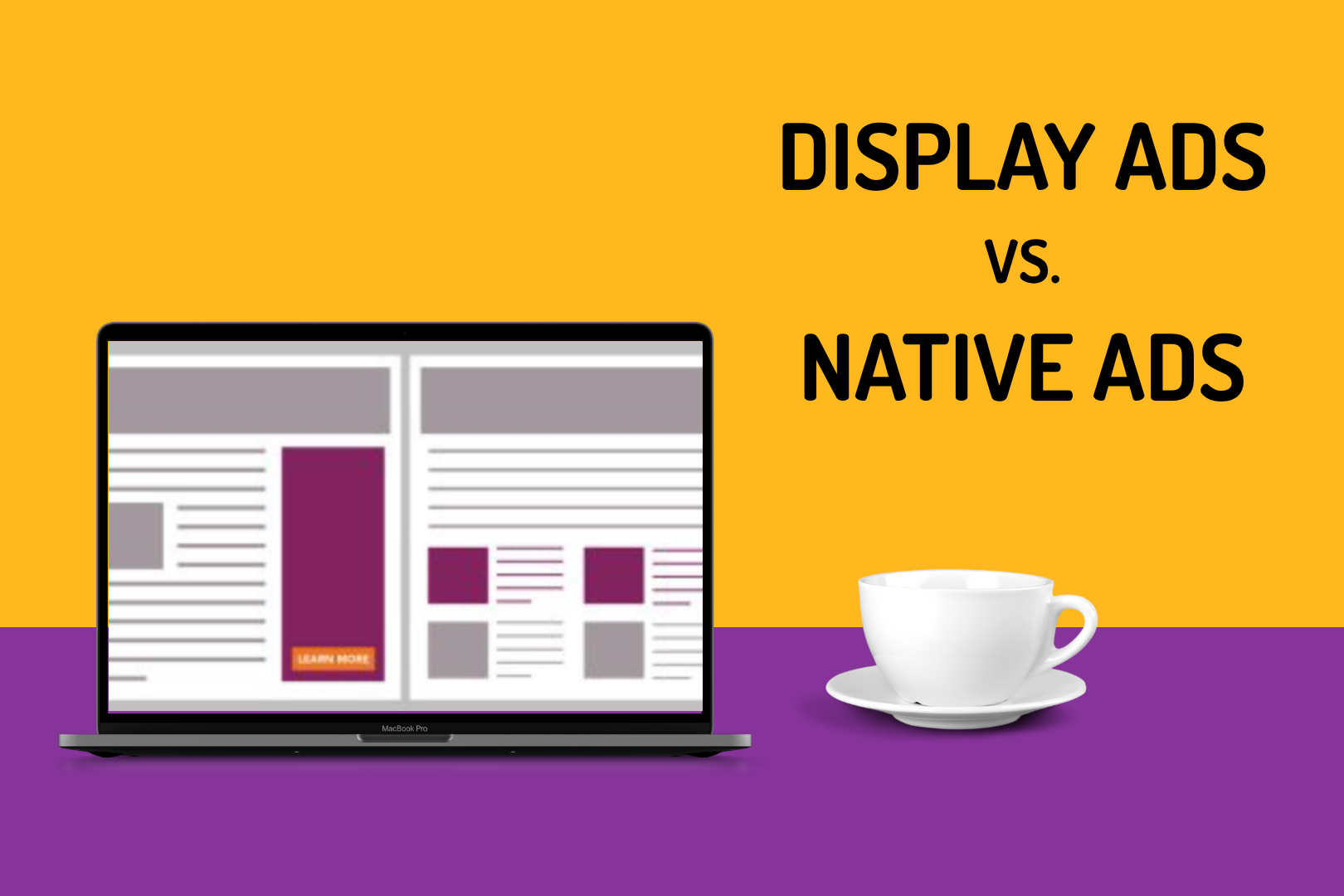
Native Ads
In contrast, the native format blends into the content environment, appearing as part of articles, recommended content, or thematic blocks. It doesn't interrupt the user experience but rather fits in as if it were part of the editorial page.
Comparison
What does this mean in practice?
For example, if the campaign's goal is the quick sale of a new product, display advertising is the more effective tool. However, if you want your brand to convey value, tell a story, or build audience engagement in the long term, native advertising might prove to be a better choice.
#m1-y#Tip: In many cases, the best results come from combining the two formats. You build your brand with native ads, then reinforce your message with display campaigns, so the user encounters your brand in multiple formats, which increases recognition and trust.##
In summary
Native advertising is not just a new format, but a more subtle, content-centric communication that focuses on building trust, education, and brand awareness. It's not a tool for quick sales, but for conscious brand building. If you want your audience not just to see you, but to remember you, it's worth incorporating it into your media mix.
Native ads also reach those who "blindly" scroll past classic banners. However, for quick traffic generation or promotional communication, display formats are more effective. The best results, however, often come from a combination of the two. You build the brand with native advertising, and with display campaigns, you increase reach and recognition.
Selector collaborates with several native partners, so if you'd like to try native formats or build a content-based pillar alongside your existing PPC strategy, we can help with that too.
If you'd like to try native advertising, perhaps as a complement to your existing PPC campaigns, now's your opportunity! We'll help you with creative preparation, targeting, and optimization, ensuring your campaign not only launches but runs effectively.






.jpg)
.png)